On this page
There are two ways heat leaves a house. It conducts through solid surfaces, which is what insulation slows down, and it rides out on moving air, which insulation does nothing about. Most homeowners spend on the first problem and have the second one.
The tell is simple. If your house feels draughty in some rooms, cold near the floor, and never quite even, you have an air problem rather than an insulation problem.
- Floors, walls, ceilingsabout 31%
- Ductsabout 15%
- Fireplaceabout 14%
- Plumbing penetrationsabout 13%
- Doorsabout 11%
- Windowsabout 10%
- Fans and ventsabout 4%
- Electrical outletsabout 2%
Average share of air leakage by location, from US Department of Energy figures for a typical single-family home. Your house will differ, particularly if it has no fireplace or no ducts. Use it to decide where to look first rather than as a measurement of your own building.
Key figures
- about 31% DOE typical air leakage at building joints
- about 15% DOE typical air leakage through ducts
- about 10% DOE typical air leakage through windows
The first bar is doing the work
Notice that the largest share is not a component you can point at. It is the joins between building parts: where the wall meets the floor, where the ceiling meets the wall, where a stud bay opens into an attic.
That is why air sealing feels unsatisfying to shop for. There is no product called “the gap at the top of your interior walls”. There is only caulk, foam and an afternoon.
The five places worth checking first
The attic hatch. A lid resting on a frame, with a temperature difference of tens of degrees across it. Weatherstrip it and add a piece of rigid insulation on the attic side.
Recessed lights. Older housings are effectively holes in your ceiling with a lamp in them. Sealed, insulation-contact rated versions exist. Retrofitting them is worth it if you have many.
Where pipes and wires pass through. Under sinks, behind the washing machine, where cables leave the wall into an unheated space. Expanding foam for large gaps, caulk for small.
The rim joist. The band of framing at the top of a basement wall, sitting directly against the outside. In older houses it is often bare. It is also one of the highest return sealing jobs in the building.
The fireplace. An open damper is a permanently open window. A chimney balloon or a damper seal costs little and takes minutes.
Finding leaks with what you already own
Pick a cold, windy day, which exaggerates the pressure difference across your walls. Then make the house harder to breathe: close all windows and exterior doors, and switch on every extractor fan you have, in the kitchen and bathrooms. That pulls the indoor pressure down slightly, so outside air rushes in through every gap.
Now walk around with a stick of incense or a thin ribbon on a pencil. Hold it near the suspects and watch the smoke bend. Around outlets, at skirting boards, where the ceiling meets the wall, around the attic hatch, at window and door frames.
Mark what you find with tape as you go. It is astonishing how much you will not remember an hour later.
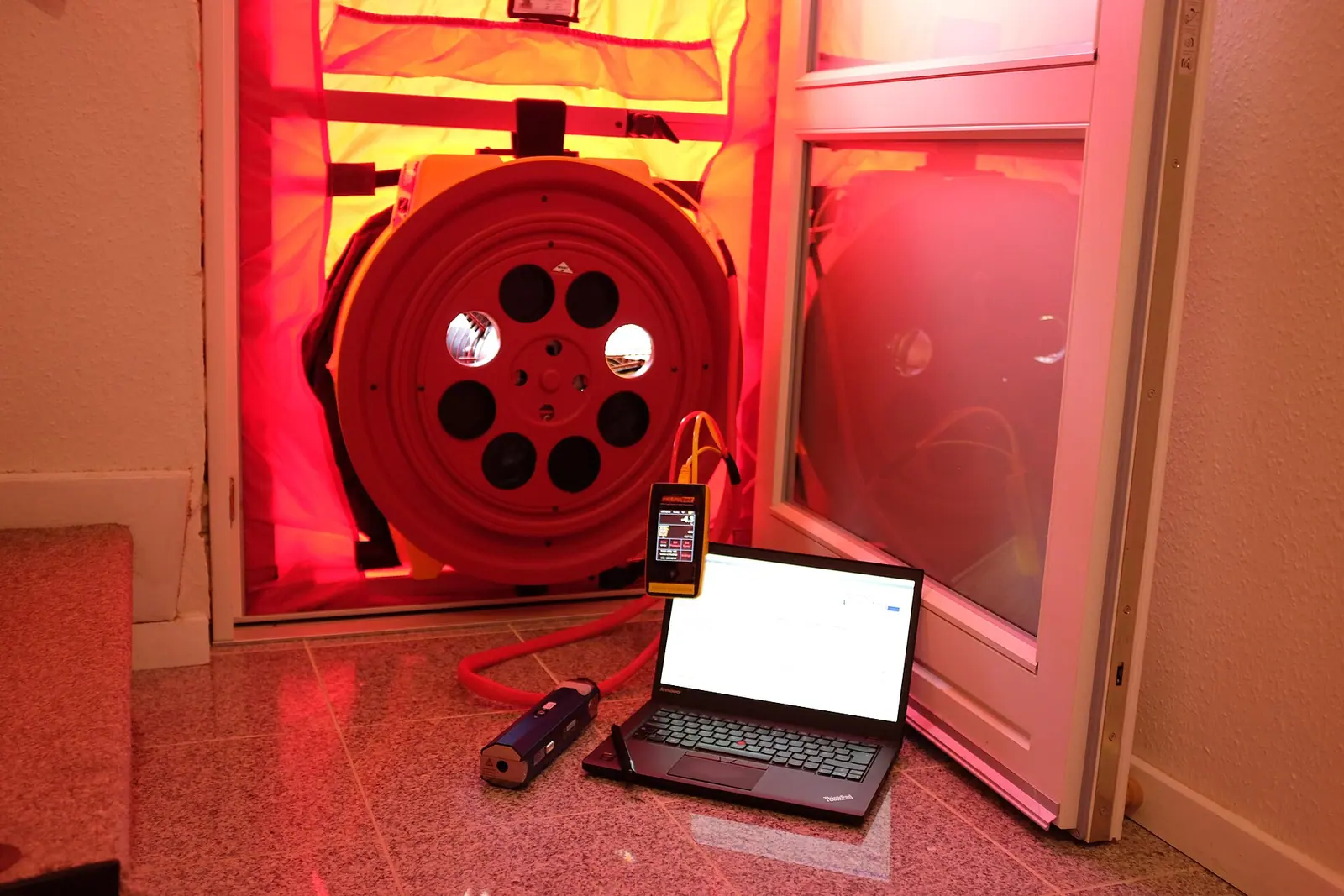
An energy auditor uses a blower door, which is a calibrated fan in a doorway that depressurises the whole house and measures how leaky it is as a number. That gives you a before and after figure, and often finds leaks the incense misses. Many utilities subsidise the test.
Seal in the right order
- The attic plane first. Heat rises, so the biggest pressure difference is up there and the biggest gains are too.
- The basement or crawlspace next, particularly the rim joist.
- The middle of the house last. It matters least, which is the opposite of where people start.
Do not seal everything
A house needs air exchange. Sealing a leaky old building tight without thinking about ventilation moves the problem rather than solving it, and shows up as condensation, stale air and damp.
If your house is genuinely tight after the work, you need controlled ventilation rather than accidental leaks. That is a good problem to have, and it is a different job.
Related reading: Six Signs Your Attic Insulation Is Failing and Duct Sealing Quotes: Tests, Rebates and Net Cost.
Questions people ask
Is air sealing or insulation the better first spend?
Air sealing, in almost every older house. It is cheaper, it is faster, and insulation performs closer to its rating once the air movement through it stops.
Do outlet gaskets do anything?
A little. Outlets are the smallest share on the chart, so they are the last thing to do rather than the first. They are cheap enough to be worth doing eventually.
Can sealing make a house too tight?
A typical older home is nowhere near that point. If you do reach it, the answer is mechanical ventilation, not deliberately leaving holes in the building.
What should I use, caulk or foam?
Caulk for gaps up to a few millimetres, expanding foam for larger ones, and fire-rated products anywhere near a flue or chimney.
Where these figures come from
- Energy Saver, the Department of Energy home efficiency guide US Department of Energy · energy.gov
- Use of energy in homes US Energy Information Administration · eia.gov
Figures last checked September 2026.