On this page
A duct-sealing quote should purchase a defined treatment of a measured duct problem. The result needs more detail than a statement that a home has leaky ducts or that a process removes most leaks. Testing, accessible repairs, sealing method and completion reporting all affect what two prices buy.
This guide uses ENERGY STAR’s leakage guidance and a named utility program to make the numbers concrete. The sources do not establish a universal installed labor price, so no national price range is invented here. The worked budget uses an openly assumed contractor total and explains the conditions attached to the published rebate.
Key figures
- 20–30% Typical duct airflow lost, per ENERGY STAR
- $1,250 Puget Sound Energy rebate for eligible advanced sealing
- At least 200 CFM PSE rebate pre-leakage requirement at 50 pascals
The published leakage range is an airflow problem
ENERGY STAR describes about 20–30% of air moving through a typical household duct system as lost through leaks, holes and poorly connected ducts. That statement concerns airflow through the system. It does not say every house loses that share of its whole energy bill, or that sealing guarantees that percentage in cash savings.
Where leaks occur matters. Air escaping into an unconditioned attic is different from leakage within the house’s conditioned boundary. Return-side leaks can draw air from unwanted locations. A disconnected run or crushed duct is also a different fault from small distributed holes addressed by an aerosol process.
Ask the provider to distinguish observed defects from a marketing benchmark. The house air-leak guide covers the building enclosure; duct sealing addresses the distribution network. A quote for one does not automatically fix or measure the other.
A test should identify its pressure and starting result
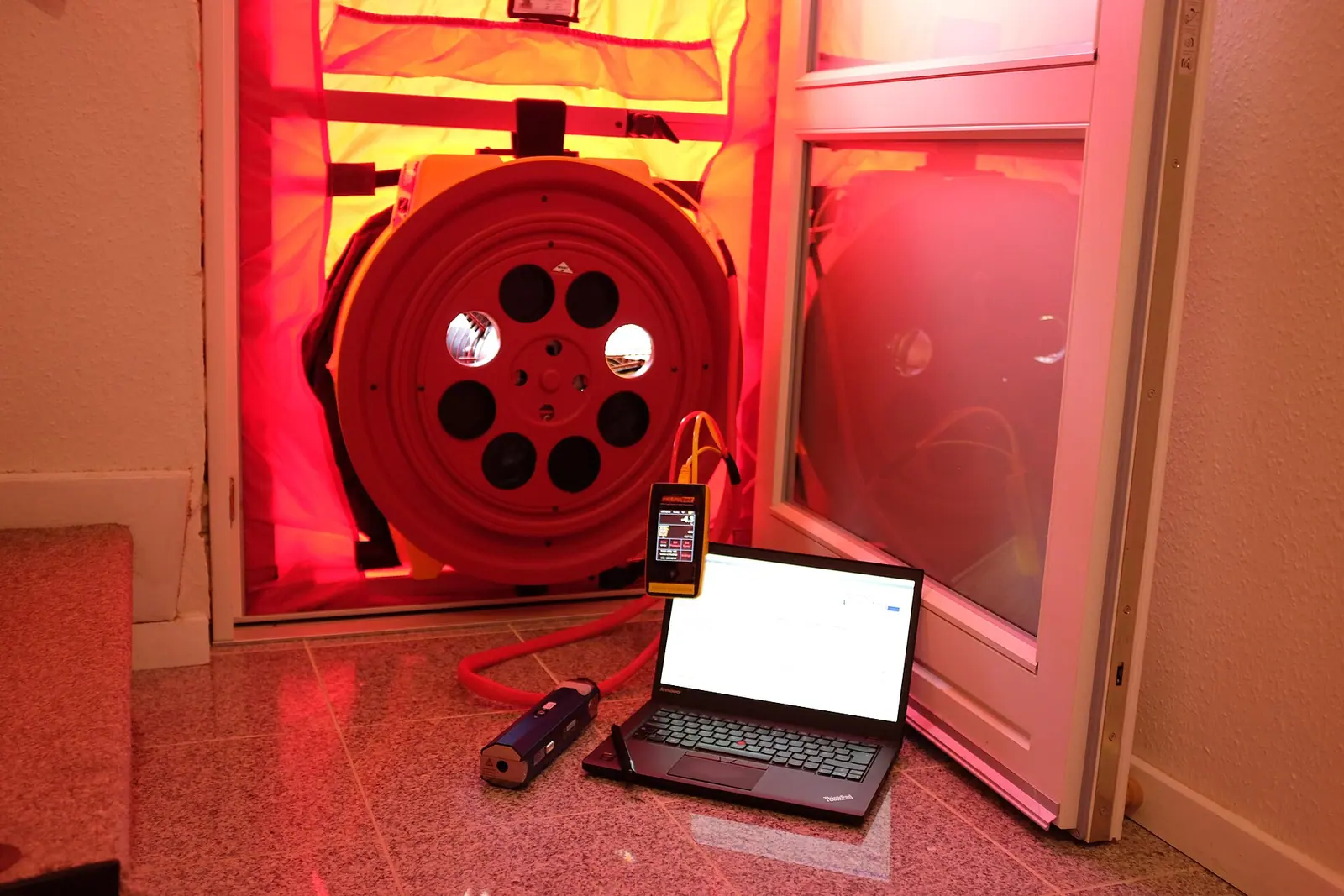
CFM means cubic feet of air per minute; pascals identify test pressure. A leakage result without its pressure, test method and system boundary is not enough to compare before and after. A provider should state what was tested and how any temporarily blocked openings were handled.
| Published PSE advanced-sealing condition | Program figure or rule |
|---|---|
| Single-family rebate | $1,250 |
| Pre-leakage test threshold | At least 200 CFM at 50 pascals |
| Stated equivalent threshold | At least 125 CFM at 25 pascals |
| Building limit | Single-family home, four units or fewer |
| Payment route | Instant rebate through the contractor |
Source note: Puget Sound Energy, Advanced Duct Sealing Rebate, checked October 2026. This is a named Washington utility program, not a national price or an entitlement for any home with ducts. Heating service and contractor eligibility also apply.
For an arithmetic example, assume the same test method finds 300 CFM before and 45 CFM after. The reduction is 255 CFM, or 85% of the initial measured leakage. It is not an 85% reduction in household energy charges. Both numbers are illustrative test results, not findings from a inspected home.
Request the before-and-after report as part of the quoted completion. A promise to provide an app screen or a verbal percentage is less clear than a report naming pressure, readings and system. PSE’s published process specifically includes a before-and-after leakage analysis.
Access and repair define what sealing can achieve
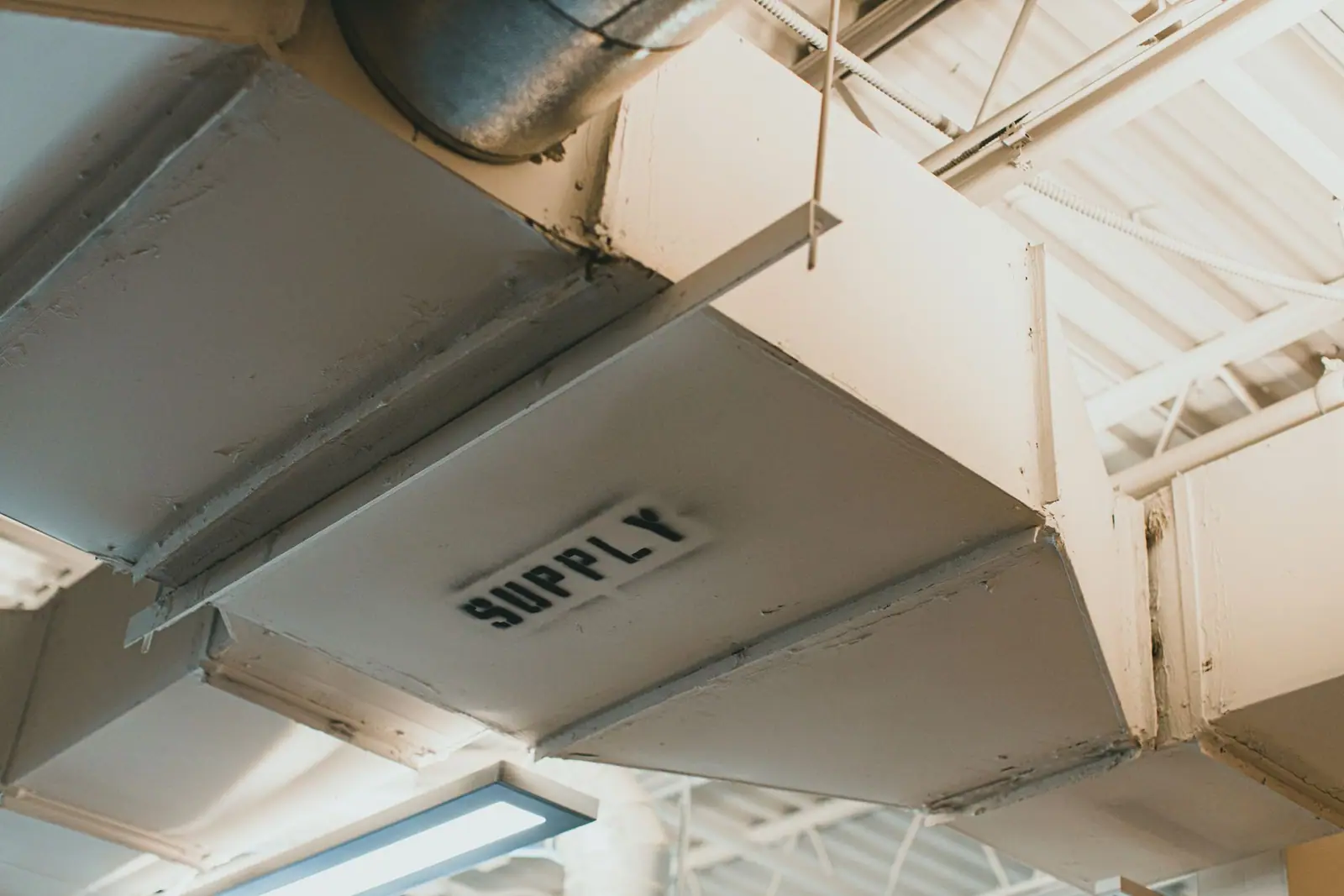
The quote should identify supply and return work, the number of systems and whether mechanical repairs are included. A house with two separate networks is not the same scope as a compact single system. Access through an attic, crawl space or finished ceiling can change preparation and repair costs.
Ask what happens to disconnected, damaged or inaccessible sections. Sealing small leakage paths does not establish that a missing connection is rebuilt or that a restricted run has adequate airflow. Separate replacement and insulation work from the sealant application when they are different purchased services.
The contractor estimate guide covers allowances and exclusions. Use it to record any additional diagnosis, cleaning, repairs, insulation or testing outside the first price. Ask what finding would trigger another charge instead of assuming the process includes every duct-related task.
A utility rebate lowers cost only for a qualifying project
PSE requires its residential heating service through the ducts being sealed and an Aeroseal-certified PSE Trade Ally. Its rebate goes through the contractor at the point of sale; PSE does not pay it directly to the homeowner. An out-of-network contractor is not eligible under the published advanced-sealing program.
For an assumed $3,000 qualifying invoice, a confirmed $1,250 rebate leaves $1,750 before any separately excluded charges. If an assumed $400 repair is outside that invoice and does not receive an extra rebate, the household total becomes $2,150. Those invoice and repair amounts are worksheet assumptions, not prices published by PSE.
Ask whether the displayed quote already subtracts the rebate. Taking it off twice would turn the first example into $500 and understate the household payment by $1,250. Keep the gross price, each confirmed contribution and net payment on distinct lines.
Outside the named service area, begin with the full contractor price and any program the utility confirms. A published rebate elsewhere supplies context for how assistance works; it should not be imported into a budget for a different utility account.
Payback requires an energy estimate beyond the leakage percentage
Ask how the proposed annual energy saving was derived. It should identify existing energy use, duct location, expected operating changes and the household tariff. A laboratory pressure-test reduction alone cannot establish the annual kWh reduction during ordinary operation.
At EIA’s July 2026 national residential benchmark of 18.31 cents per kWh, an assumed annual reduction of 500 kWh is worth $91.55. A 1,000 kWh reduction is $183.10. Dividing the assumed $1,750 net project by those savings gives about 19.1 years or 9.6 years of simple payback. These are sensitivity examples, not a forecast for the house.
The home energy budget keeps distribution work beside insulation and equipment changes. Several measures can overlap, so use a package estimate when projects share the same heating or cooling load. Comfort and restored service can also justify work without being assigned an invented cash value.
Have qualified providers assess unsafe equipment, combustion, damaged ducts and suspected contamination before agreeing to a sealing method. This comparison does not specify sealant application, airflow design or cleaning for the house.
The best quote establishes the problem, treats the agreed network, explains exclusions and documents the result. A lower price for fewer systems or no verification may still be the right scope, but it should be compared openly with what the other proposal includes. Retain the report for later service rather than treating a large percentage as a complete account of the project’s value.
Questions people ask
Is there one national duct-sealing price?
The primary sources here do not establish one. Obtain a quote identifying systems, test results, access, repairs and completion reporting. The $3,000 example in this guide is an assumption used to demonstrate rebate arithmetic.
Does an 85% leakage reduction mean an 85% bill saving?
No. It describes a reduction in measured leakage under a stated test. Energy savings depend on duct location, operation, heating and cooling loads and the household tariff.
What is PSE's advanced duct-sealing rebate?
The checked program lists $1,250 for qualifying single-family work, with heating-service, pre-leakage and authorized-contractor requirements. It is an instant contribution through the contractor, not a national rebate.
What should be included at completion?
Request the agreed repairs and sealing work plus before-and-after test reporting that names method, pressure and readings. Keep cleaning, insulation and other excluded operations visible as separate services.
Where these figures come from
- Duct Sealing EPA ENERGY STAR · energystar.gov
- Advanced Duct Sealing Rebate Puget Sound Energy · pse.com
- July 2026 Residential Electricity Prices U.S. Energy Information Administration · eia.gov
Figures last checked October 2026.