On this page
Renting a log splitter can reduce the cash cost of firewood when there is already a supply of logs, space to work and enough time to process and dry them. Delivered wood buys a different result: a stated quantity and condition brought to the property. Comparing a rental day with a delivered cord without accounting for the wood itself leaves most of the decision unanswered.
Published supplier prices make the comparison concrete. Holmes Rental’s daily and weekly rates cover the machine; Firewood Flex’s product pages price kiln-dried wood in fractional cords. They operate in different markets, so the figures below explain cost structure rather than offer two services bookable at the same address. Current local quotes establish the available alternatives.
Key figures
- $75.90 Holmes splitter daily rental, damage surcharge included
- $231 Holmes splitter weekly rental, damage surcharge included
- 128 stacked cubic feet Volume in one full cord of firewood
The rental surcharge belongs in the machine cost
Holmes lists its 27-ton vertical/horizontal splitter at $69 daily, $210 weekly and $525 monthly. Its page also states a 10% damage surcharge on rentals, with commercial exemptions to ask about. At the listed rates, the daily machine charge plus surcharge is $75.90 and the weekly charge plus surcharge is $231.
| Holmes rental period | Listed rent | With the published 10% surcharge |
|---|---|---|
| One day | $69 | $75.90 |
| One week | $210 | $231 |
| One month | $525 | $577.50 |
Source: Holmes Rental’s own 27-ton splitter page, checked October 2026. Calculations add the page’s 10% damage surcharge. Tax, fuel, delivery or pickup, deposit and other contract charges are not included. Confirm the rental clock, use limits, surcharge terms and return requirements; the surcharge is not proof of unlimited damage coverage.
- One day$75.90
- One week$231
- One month$577.50
Holmes Rental published rates, checked October 2026. Named rental-period totals include the 10% surcharge; tax, transport, fuel and other charges excluded.
Three separate daily charges would total $207 before the surcharge, compared with $210 for the week. Four daily charges would total $276, or $303.60 with the surcharge, compared with $231 for the weekly example. The $72.60 difference only applies if the provider allows the needed work and return timing under that weekly contract.
Ask whether a day means a calendar period, a stated number of operating hours or another limit. A late return can change the period charged. Weather delays, transport time and preparation can consume a rental window before much wood is split, so establish the schedule before deciding how many days to buy.
Delivered wood has a quantity and an address boundary
Firewood Flex’s current quarter-cord product is $499 for 32 stacked cubic feet; its half cord is $799 for 64 cubic feet. These live prices supersede older search snippets showing $459 and $749. The product pages require a ZIP-code check for included local pallet delivery, with an individual freight quote outside the standard area.
Dividing the product prices by their stated stacked volumes gives about $15.59 per cubic foot for the quarter cord and $12.48 for the half cord. Two quarter-cord orders at the listed price total $998 for the same stated 64 cubic feet, $199 above one half-cord order. Confirm delivery and availability before interpreting that difference as the final saving at an address.
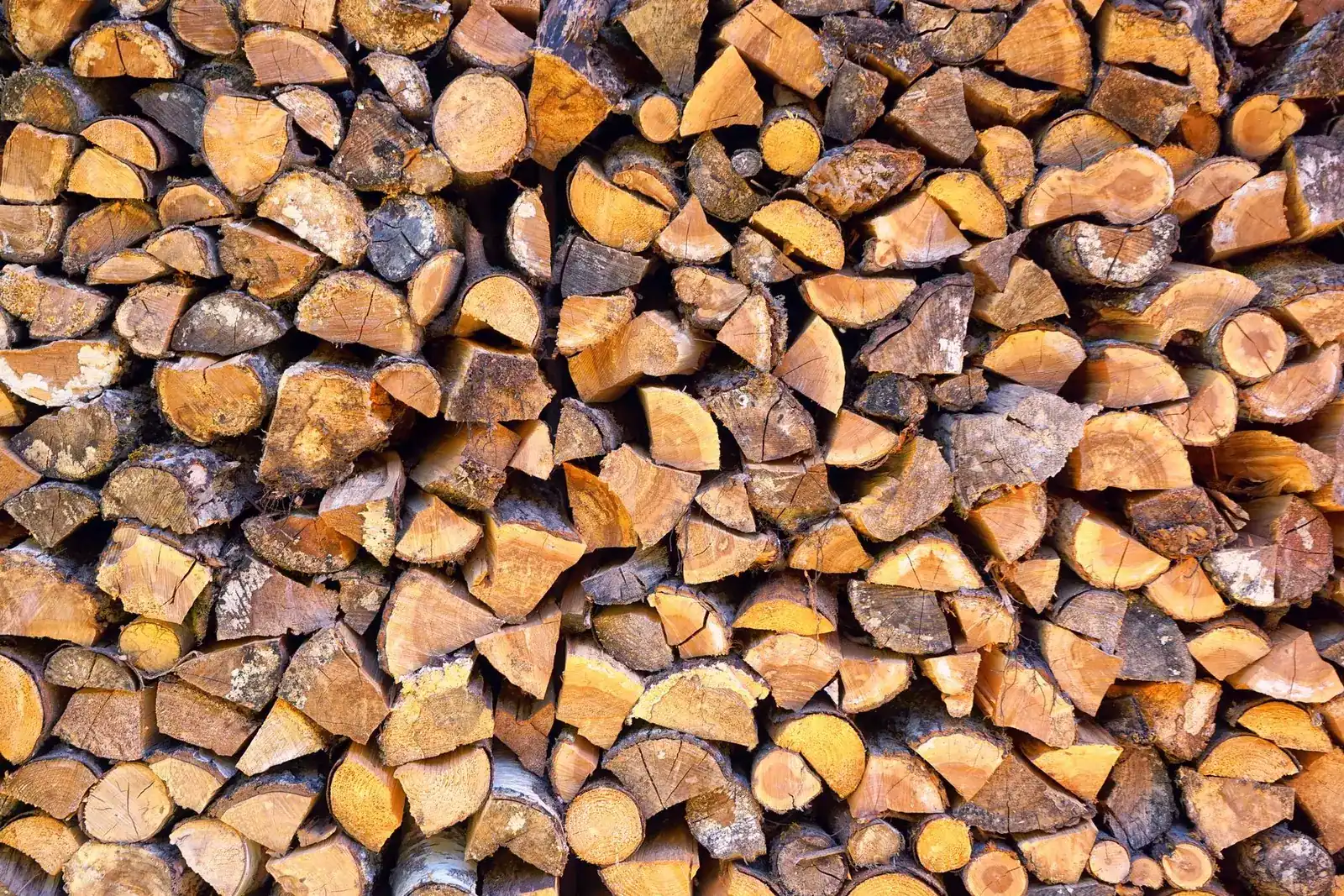
NIST’s 2026 Handbook 130 defines a cord as 128 cubic feet when ranked and well stowed. A 4-foot by 4-foot by 8-foot stack illustrates that volume. Half a cord is 64 cubic feet and a quarter is 32. Those figures describe stacked wood including the spaces between pieces, not 128 cubic feet of solid timber.
A face cord is harder to compare without the log length and stacked dimensions. The cord-buying guide explains how to ask for volume instead of relying on a pickup load or a pile photograph. Keep species, split size, dryness and delivery placement in the comparison as well.
The log supply decides whether rental has an advantage
Suppose an owner already has enough usable logs to produce half a cord after processing. Using two hypothetical daily rental charges produces $151.80 with the surcharge. Add an invented $40 transport allowance and $20 fuel allowance: the cash example becomes $211.80 before other costs.
If those logs instead cost a hypothetical $200, the total becomes $411.80. Compared with the cited $799 delivered half cord, the apparent cash gap is $387.20. That is not a promised saving: the supply quantity, yield, delivery coverage and resulting dryness have not been established as equivalent.
Tree removal, cutting logs to length, disposing of unsuitable pieces and moving material can add work outside splitting. A splitter rental does not purchase standing timber removal or magically turn a log pile into a measured cord. Ask whether the logs are already in a form the rented machine accepts and whether the operator can safely manage the work.
Splitting time is not the same as drying time
A splitter makes smaller pieces; it does not make freshly cut wood dry enough to burn. EPA’s archived Burn Wise guidance says wood burns best below 20% moisture and recommends seasoning for at least six months. Climate, species and storage affect the result, so elapsed time alone is not a moisture test.
If the household needs fuel this week, logs that need months of drying cannot replace a ready-to-burn delivery on the same schedule. The seasoning and moisture guide explains the measurement question. A seller’s kiln-dried label should still come with a condition and quantity the buyer can assess.
Firewood Flex advertises under 15% moisture and 16-inch splits for these products. Those are its product claims, not a guarantee that every delivered supplier has the same specifications or that every stove accepts that length. Record the appliance’s firebox requirements before ordering or processing the fuel.
Labor and storage can change the preferred option
Keep cash spending and the value of time separate. If the hypothetical $411.80 rental-and-log example requires six hours valued at an invented $30 per hour, the time allowance is $180 and the comparison total becomes $591.80. That is an economic comparison, not an extra invoice or cash saving available to spend.
The owner also needs storage and the ability to move and stack the finished wood. A delivered pallet can reduce handling, but its placement and access should be confirmed. A driveway drop is different from stacking inside a shed, and a supplier’s delivery inclusion does not establish every placement service.
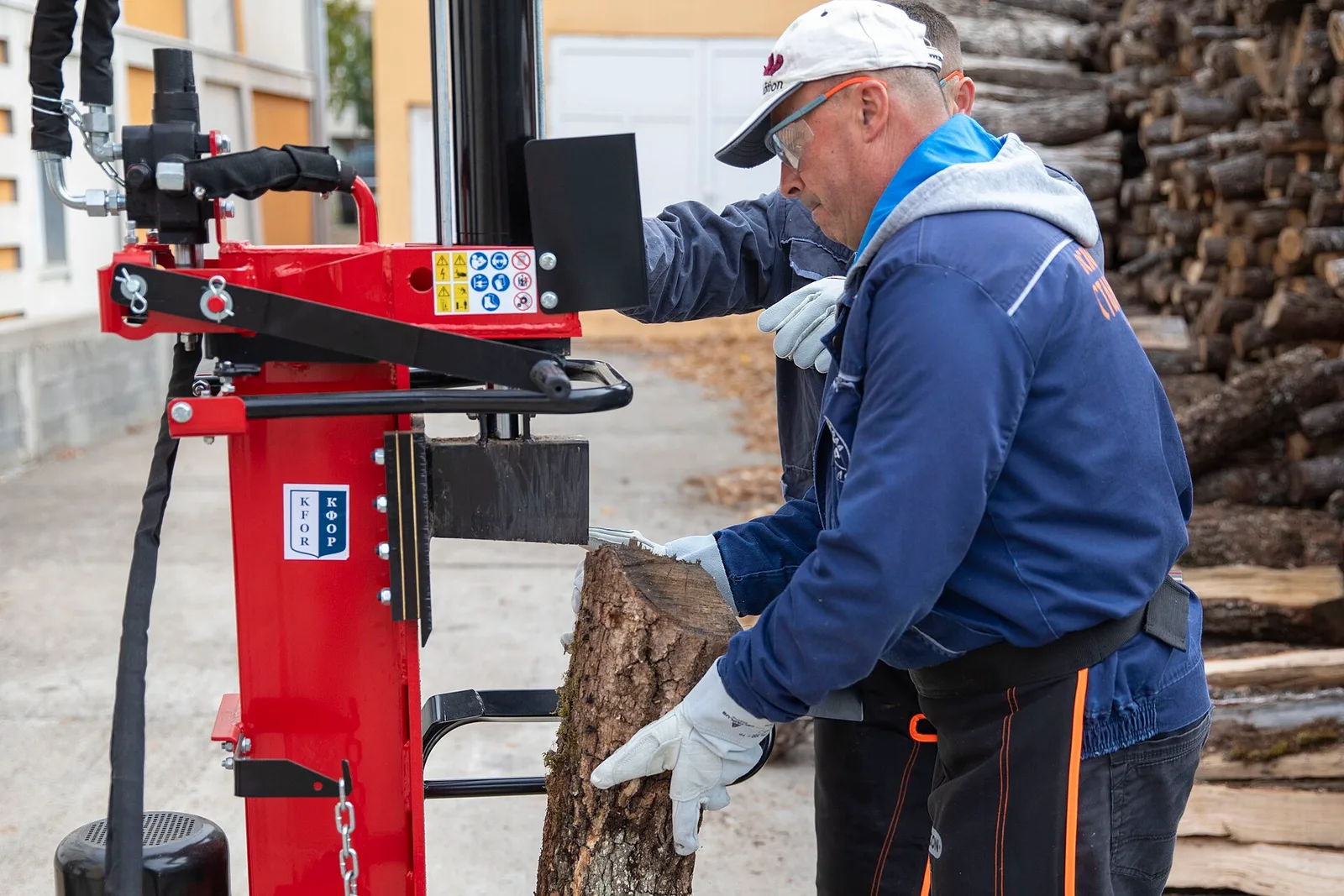
Obtain the rental provider’s operating and transport instructions and assess whether the task can be done safely. Keep hands and bystanders clear of the splitting zone; do not use the cost comparison as an operating procedure or improvise towing arrangements.
The firewood storage guide helps account for the space and handling after either choice. Compare the delivered result: measured dry fuel at the needed date, with transport, supply, labor and storage included. Rental is most attractive when those conditions already favor processing the available logs.
Questions people ask
Is the published $69 day the final rental bill?
Holmes also publishes a 10% damage surcharge, making that machine example $75.90 before tax, transport, fuel and other charges. Confirm the contract and rental clock.
Is half a cord 64 cubic feet of solid wood?
It is 64 cubic feet of ranked, well-stowed stacked wood, including spaces between pieces. NIST's full-cord definition is 128 cubic feet.
Can freshly split logs replace dry delivery immediately?
Splitting does not dry the wood. Check moisture and allow seasoning time; EPA's archived guidance says wood burns best below 20% moisture.
Does the delivered price apply everywhere?
The cited seller checks included local pallet delivery by ZIP code and quotes freight outside that area. Confirm the address, placement and total before comparing.
Where these figures come from
- 27-ton splitter rental rates and damage surcharge Holmes Rental Station · holmesrentalandsales.com
- Current quarter-cord product price and delivery Firewood Flex · firewoodflex.com
- Current half-cord product price and delivery Firewood Flex · firewoodflex.com
- Cord definition, Handbook 130, 2026 edition National Institute of Standards and Technology · nist.gov
- Archived wood moisture and seasoning guidance US Environmental Protection Agency · epa.gov
Figures last checked October 2026.