On this page
Septic effluent filter service costs should distinguish cleaning a reusable cartridge, replacing a broken part and dealing with access to the tank. A clogged filter does not mean the entire septic system needs replacement. It also does not mean rinsing that one part resolves every cause of a backup.
Johnson Johns publishes routine filter cleaning at $75–$150, with replacement adding parts cost according to the filter model. This is the provider’s own service range, checked October 2026, rather than a national average. Use it as a reference for the kind of work being purchased, then get a quote naming the tank access and any other service.
Key figures
- $75–$150 Johnson Johns routine effluent-filter cleaning
- $185 Example: filter cleaning and separate lid access
- 3–5 years EPA typical household septic pumping interval
The filter protects the outlet without replacing tank treatment
An effluent filter is fitted at the septic tank’s outlet and helps hold back solids before liquid reaches downstream components. It belongs to the treatment arrangement; it is not a drinking-water filter, an odor cartridge on a vent or a reason to stop pumping accumulated solids from the tank.
Polylok’s PL-122 illustrates why identification matters. The manufacturer lists 122 linear feet of 1/16-inch filtering slots and a residential flow rating up to 3,000 gallons per day. That capacity is a product specification, not the household’s permitted sewage flow or permission to send that much wastewater to any drainfield.
The model includes a flow-control ball designed to stop outlet flow while its filter is removed for servicing. Other designs can have different handling requirements. Have the service provider identify the installed cartridge, housing and any shutoff arrangement before deciding what will be cleaned or replaced.
Record the manufacturer and part numbers after the visit. A cartridge that looks similar can differ in dimensions, fit or filtration design. Ask whether a proposed replacement preserves the system’s specified arrangement rather than substituting a part solely because it is cheaper or available immediately.
A routine cleaning price leaves parts and access to be defined
| Published item or hypothetical comparison | Amount | What the figure means |
|---|---|---|
| Johnson Johns routine filter cleaning | $75–$150 | Provider’s service range |
| Replacement cartridge or housing | Quote required | Parts vary with the model and damage |
| Hypothetical cleaning | $125 | Assumed service amount within the listed range |
| Hypothetical separate lid-access charge | $60 | Invented access example, not the provider’s rate |
| Those two hypothetical lines | $185 | Cleaning plus assumed access |
Source: Johnson Johns’ own effluent-filter service page, checked October 2026. The last three rows are explicitly hypothetical. Confirm travel, minimum visit charges, excavation, replacement parts, tax and any bundled pumping before using a final total.
The endpoints of the listed routine range differ by $75. Ask what places the job at either end rather than assuming the low figure applies to a deeply buried lid or damaged housing. A tank that can be reached through a sound secured riser has a different access scope from one whose location is unknown.
For another hypothetical comparison, assume a $150 stand-alone visit and a $40 filter-service add-on during an already needed pump-out. The marginal filter cost differs by $110. Those invented amounts explain a possible bundling decision; they do not say Johnson Johns offers that add-on price, or that an unnecessary pump-out should be bought to save on cleaning.
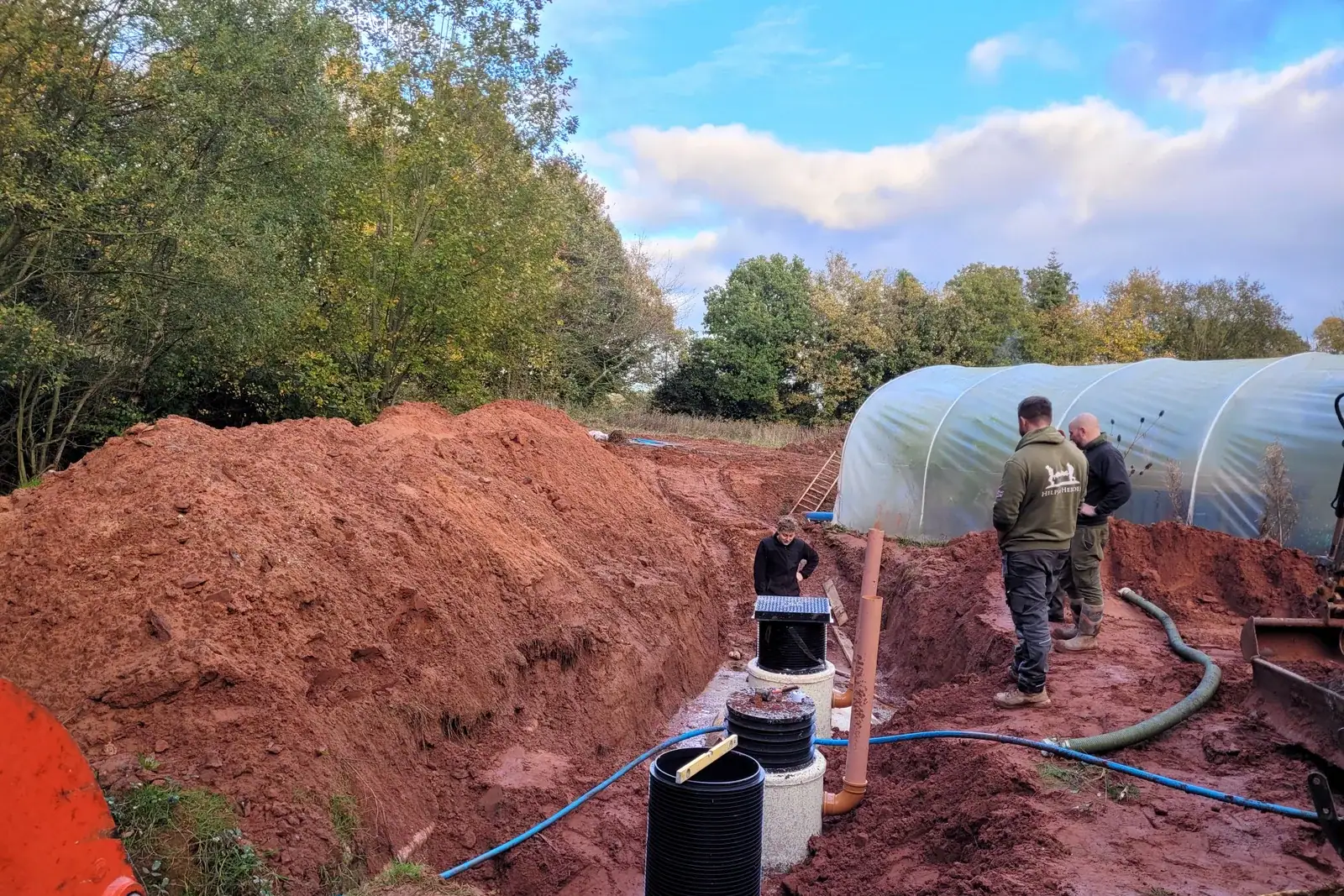
The riser installation guide separates one-time access improvement from recurring service. Have any digging, locating or riser proposal stated separately so it does not become an unexplained addition to the filter bill.
The service record distinguishes cleaning from a damaged assembly
Ask the technician to record whether the cartridge was clogged, damaged or missing, whether the housing and outlet connection were sound, and what work was performed. A receipt saying septic service does not tell the next technician whether the filter was inspected at all.
Cleaning a serviceable cartridge can differ from replacing a cracked cartridge, a broken handle or a damaged outlet assembly. The quote should identify which part failed and whether its price includes fitting and testing. A parts-only catalog amount cannot be compared directly with a supplied-and-installed repair.
If a housing repair is proposed, request the observation behind it and photographs the technician can obtain safely. Root intrusion, physical damage and an incorrectly fitted part require different corrections. A clogged cartridge alone is not evidence that every downstream pipe or the drainfield has failed.
A recurring backup after service warrants diagnosis, rather than another identical cleaning bought without explanation. The drainfield warning-sign guide helps separate observations at the tank from symptoms farther downstream. Preserve the report so the next contractor can see what was already checked.
Pumping decisions use solids measurements and household loading
EPA says typical household tanks are pumped every 3–5 years, with frequency affected by household size, wastewater volume, solids and tank size. Filter cleaning is separate from removing accumulated solids. Ask the provider to record the measured sludge and scum levels rather than treating the calendar as a substitute for tank observations.
EPA identifies pumping thresholds including scum within 6 inches of the outlet’s bottom, sludge within 12 inches of the outlet and solids above 25% of liquid depth. These are professional service observations, not instructions for an owner to open a tank and measure hazardous contents.
The pumping interval guide covers that larger decision. A filter that needs attention more often than the tank’s pumping interval can require its own service schedule. Follow the installed equipment and local maintenance requirements rather than assuming that every filter can wait until the next pump-out.
Secure access and contamination control are part of the visit
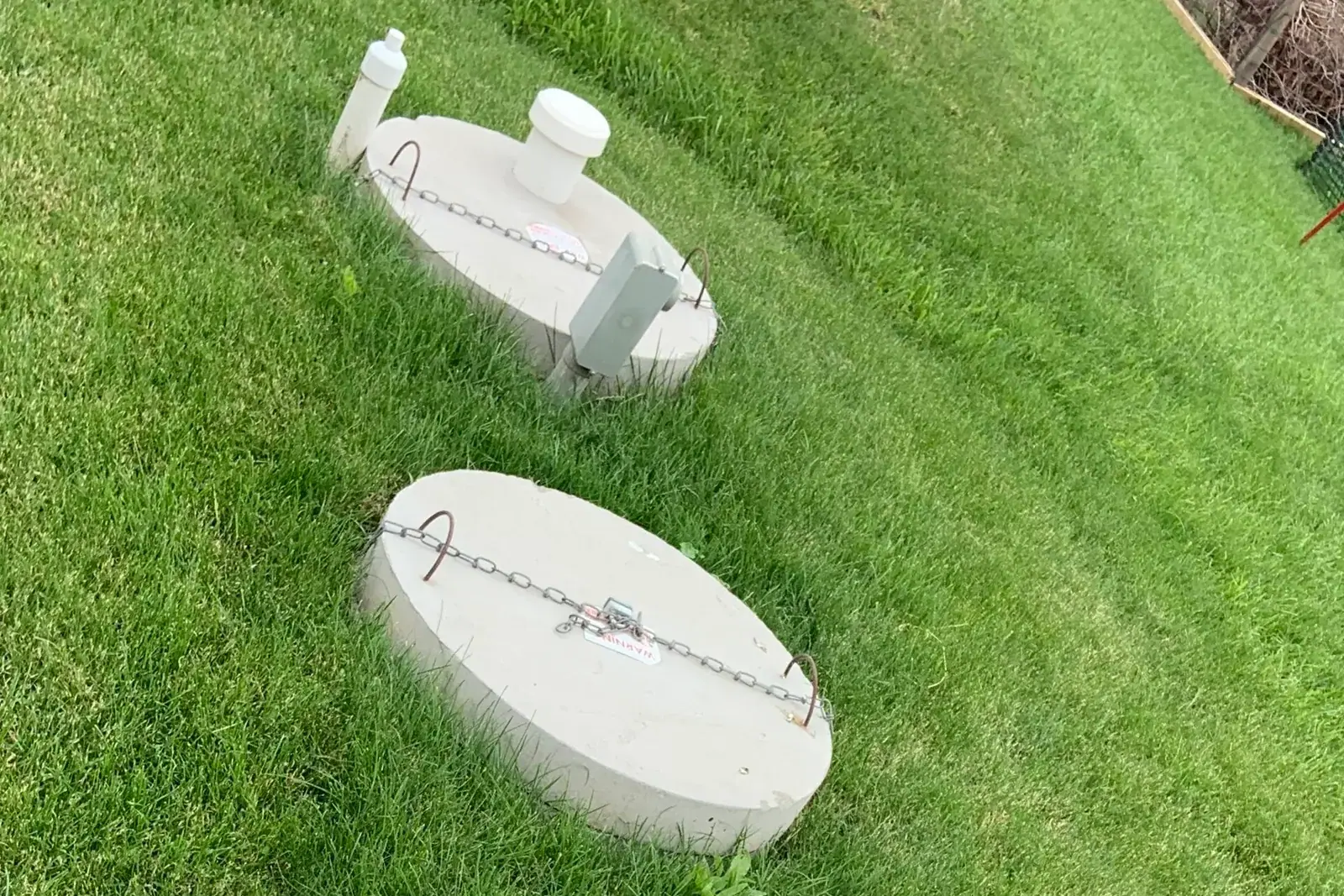
Have the service scope include restoring and securing the lid after work. A loose, missing or damaged cover leaves a separate hazard even if the cartridge is now clean. Ask the provider to document that condition and any repair required; do not let a low cleaning price stand in for closing the access safely.
Leave filter removal, tank opening and work around sewage to an equipped septic service professional. Never enter a tank or attempt a rescue inside one. Keep children and pets away from open access and have the cover secured after service.
Keep cleaning wastewater and disturbed solids within the provider’s safe service procedure. A garden hose and a reusable-looking cartridge do not make this equivalent to rinsing an ordinary household screen. The service should preserve downstream protection while the component is removed and reinstalled.
Recurring costs are based on the installed filter’s schedule
Use an inspection report and the manufacturer’s service instructions to decide the schedule. If a hypothetical property requires two $125 cleaning visits annually, that is $250 a year before any extras. A property needing one such visit has a $125 example, not proof that halving the schedule is safe for the first property.
Record each cleaning, part replacement, pumping visit and access charge separately. That history shows whether the recurring expense is a filter-service bill or a pattern of unresolved system faults. It also gives a maintenance-plan provider a clear list of services to include rather than a vague promise of septic care.
Questions people ask
Does filter cleaning include pumping the tank?
Do not assume it does. Request separate lines for filter cleaning, pumping and access, or a bundle that states which services are included.
Does every cleaning require a new filter?
No. Identify whether the reusable cartridge is serviceable or a part is damaged. Model and housing condition determine the replacement scope.
Is the PL-122 rating my drainfield's allowed flow?
No. Its 3,000-GPD figure is a manufacturer filter rating. The septic design, permit and downstream capacity remain separate.
Can a clean filter prove that a backup is solved?
No. Record the diagnosis and result. Continued symptoms can require assessment of the outlet, tank levels or downstream system.
Where these figures come from
- Our effluent-filter cleaning service and published range Johnson Johns · johnsonjohns.com
- PL-122 filter specifications and shutoff design Polylok · polylok.com
- Septic inspection, solids and pumping guidance US Environmental Protection Agency · epa.gov
Figures last checked October 2026.