On this page
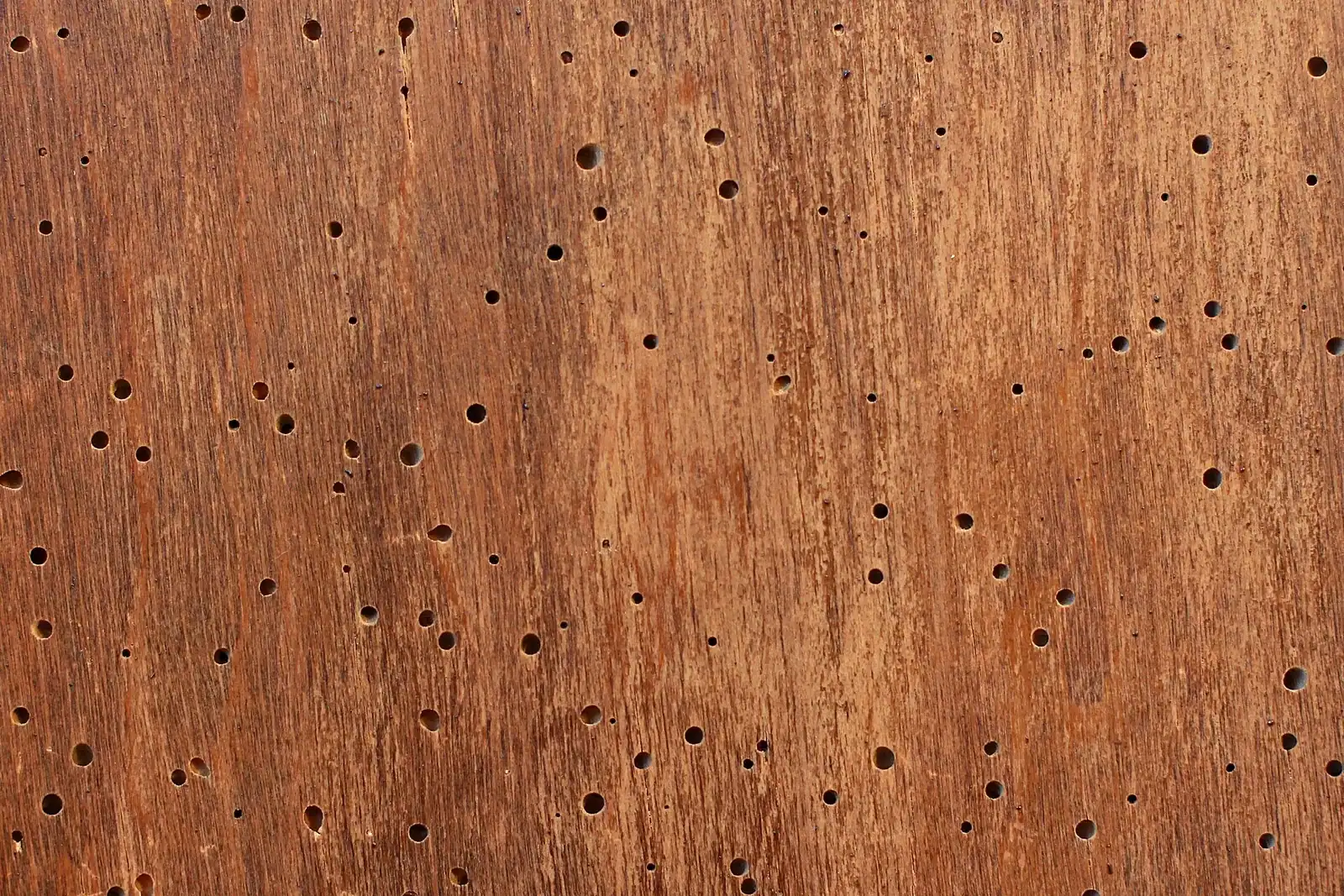
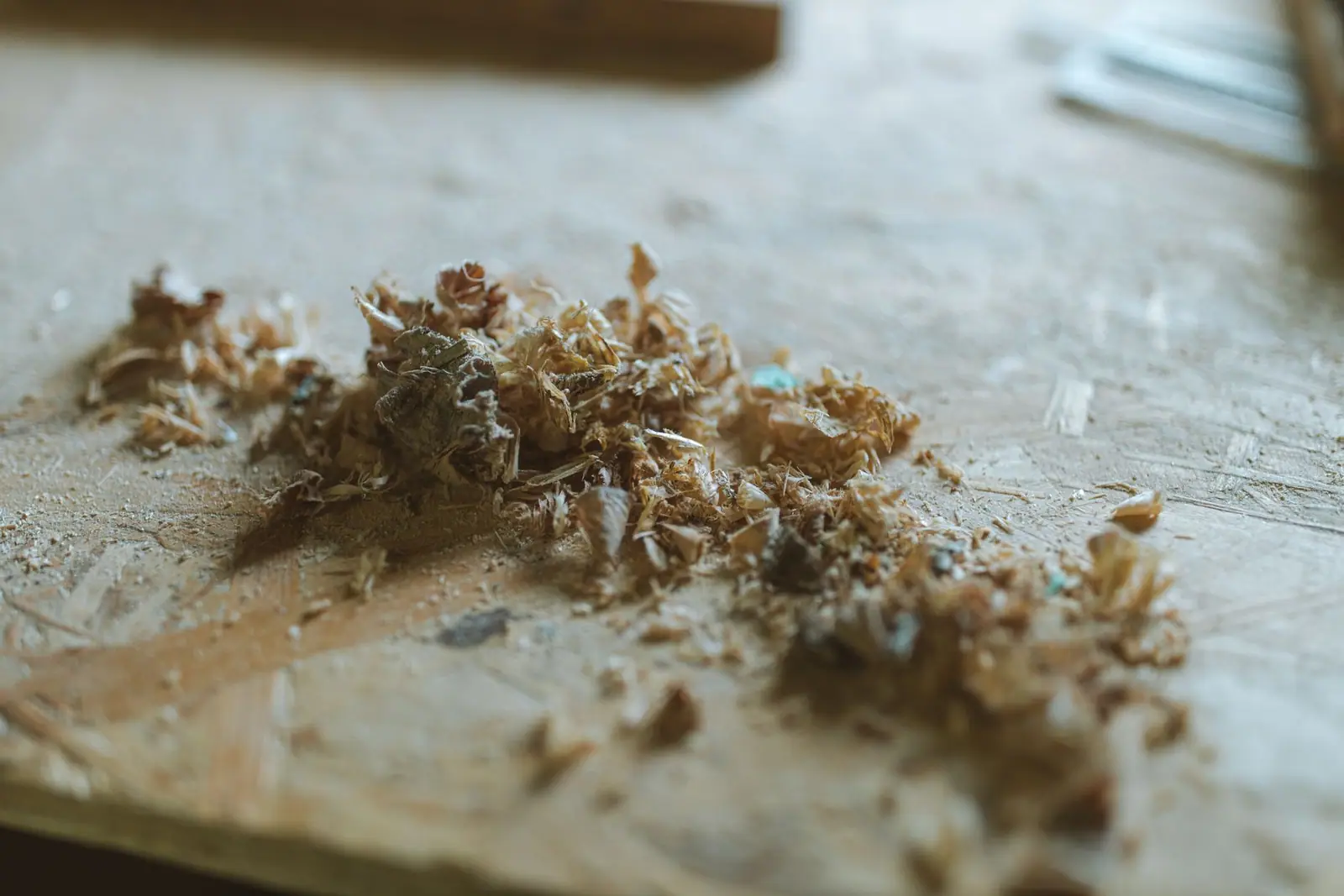
Large black ants in the kitchen in spring, a small pile of what looks like sawdust under a window frame, and a faint rustling inside a wall at night. It is the moment people call a termite company, and often the moment they sign up for the wrong product.
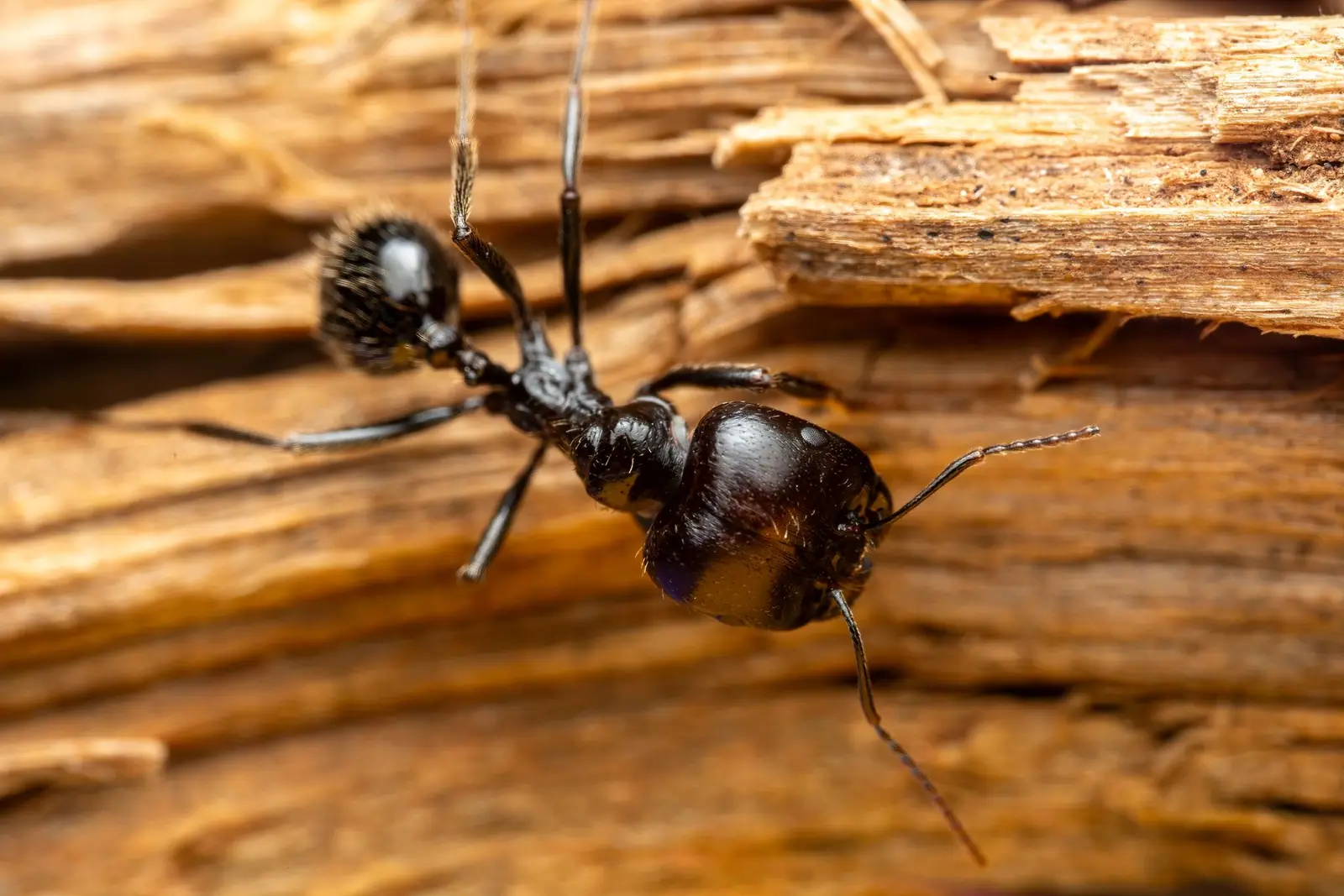
Carpenter ants do real damage, but they are a different animal with a different life, and the cure is usually cheaper and closer to home.
What they do to wood
UC IPM draws the key distinction: carpenter ants do not eat wood, they excavate it to make their nests. The wood that comes out goes somewhere, and that is your best clue.
- Carpenter ants push out fibrous, shredded sawdust, often mixed with insect parts. It collects in small piles below a hole or a crack.
- Drywood termites leave hard pellets with six flat sides.
- Subterranean termites leave nothing outside. Their galleries are packed with soil and they reach the wood through mud tubes.
Carpenter ant galleries are also clean and smooth, as if sanded. Termite galleries are rough and dirty.
Where the colony really is
The ants you see in the house are rarely the whole story. UC IPM notes that indoor nests are typically satellites of a larger parent nest outside, in a live or dead tree, a stump or a woodpile. Workers travel between the two, often along wires, fences and branches that touch the house.
That has two practical consequences. Spraying what you see indoors does almost nothing to the colony. And a tree limb resting on your roof can be as much a part of the problem as anything inside the walls.
Indoor swarmers are a different signal. Winged carpenter ants appearing inside the house suggest, in UC IPM’s words, that a mature colony has developed within the structure.
The water comes first
Infestations, UC IPM says, often begin in an area already damaged by water or wood decay and expand from there. Carpenter ants prefer wet, softened wood because it is easier to excavate.
Look first where water gets in:
- Window sills and door frames where caulk has failed.
- Roof edges and gutters that overflow into the fascia.
- Around tubs, showers and dishwashers, where slow leaks soak subfloors.
- Decks and porches where boards meet the house.
- Crawl spaces with standing moisture.
If you kill the ants and leave the leak, another colony moves into the same wet wood.
How to find the nest
The guide’s method is simple and cheap. Carpenter ants are most active after sunset, so that is when to watch.
- Put out a nontoxic lure, such as a little sugar and milk mixed in equal parts, or bits of diced crickets or mealworms, near where you have seen workers.
- Wait until after dark and watch where the workers go once they have fed.
- Follow the trail with a flashlight, ideally one with a red filter, which disturbs them less.
- Note where they enter the structure and where the trail leads outdoors.
- Listen and look at the suspected area for sawdust, frass and the faint rustling UC IPM describes in walls, floors and woodwork.
The mistake to avoid is spraying the trail you have just found. A contact spray kills the foragers in front of you, the colony loses a few workers, and you lose the one route that would have led you to the nest. Find it first, then treat it or bait along the trail.
What control looks like
The standard approach is slow-acting bait placed along trails, so the workers carry the toxicant back to the nest and share it. UC IPM also describes applying insecticide directly into a located colony, and notes that some treatments, such as certain perimeter sprays and dusts, may only be applied by a licensed applicator.
Around the treatment, the work that stops a return:
- Fix the moisture problem and replace wood that is soft or rotted.
- Trim branches so none touches the roof or walls.
- Move firewood away from the house and off the ground.
- Seal gaps where wires and pipes enter.
Is it worth a professional?
It can be, particularly for a colony inside a wall that you cannot reach, or a satellite nest you cannot find. What it should not be is a termite contract. If a company proposes soil treatment or a multi-year termite guarantee after finding carpenter ants, ask them to show you the evidence that termites are present too.
Related reading: A Wood Beetle Quote Needs Evidence of Active Damage and Insurance Almost Never Pays for Termite Damage.
Questions people ask
How do I know if I have carpenter ants or termites?
Look at what is left behind. Carpenter ants push out fibrous sawdust and leave smooth, clean galleries. Drywood termites leave six-sided pellets, and subterranean termites leave soil-packed galleries and mud tubes. Also check the insect: ants have elbowed antennae and a pinched waist.
Do carpenter ants eat wood?
No. They excavate it to make nests and discard the wood as sawdust. Termites are the ones that eat wood.
Why do I see carpenter ants inside in spring?
Workers forage from an outdoor parent nest, often in a tree or stump, and satellite nests may be in the house. Winged ants indoors suggest, according to UC IPM, that a mature colony has developed inside the structure.
What is the best way to get rid of carpenter ants?
Find the nest by following workers after dark, use slow-acting baits along trails so the ants carry them back, and fix the moisture problem that attracted them. Spraying foragers you can see does little to the colony.
Where these figures come from
- Carpenter Ants Management Guidelines University of California Statewide IPM Program · ipm.ucanr.edu
- Drywood Termites Management Guidelines University of California Statewide IPM Program · ipm.ucanr.edu
- Ants Distinguished from Termites University of California Statewide IPM Program · ipm.ucanr.edu
Figures last checked September 2026.