On this page
Storm debris removal can mean loading loose branches, cutting and removing a fallen tree, hauling damaged building materials or handling hazardous waste. Those jobs do not share a disposal route or crew requirement. The quote should identify both the work at the property and the destination for each material.
King County, Washington publishes disposal fees that give a concrete 2026 example. They are self-haul facility charges, not a nationwide cleanup labor range and not a promise that a commercial hauler pays the same rate. Use them to understand the waste portion of a proposal while obtaining separate prices for the crew, equipment and transportation.
Key figures
- $64.69 Example: King County half-ton yard-waste disposal
- $129.38 Example: King County one-ton yard-waste disposal
- $258.76 Example: King County two-ton yard-waste disposal
Separated yard waste has a different fee
King County’s 2026 table lists garbage at $243.38 per ton with a $40.25 minimum and accepted yard waste at $129.38 per ton with a $20.70 minimum. The accepted-material rules and facility choice matter. A mixed load containing building debris is not automatically entitled to the yard-waste rate because branches are visible on top.
| Assumed self-haul weight | Accepted yard-waste fee | Garbage fee |
|---|---|---|
| 0.1 ton | $20.70 minimum | $40.25 minimum |
| 0.5 ton | $64.69 | $121.69 |
| 1 ton | $129.38 | $243.38 |
| 2 tons | $258.76 | $486.76 |
Source note: King County’s published 2026 self-haul disposal schedule, checked in October 2026. The rows apply the listed per-ton rates and minimum charges to assumed weights. Accepted material, facility, loading requirements and other charges must be checked separately; commercial fees can differ.
- 0.5 ton$64.69
- 1 ton$129.38
- 2 tons$258.76
Source note: King County's published 2026 self-haul disposal schedule, checked in October 2026. The rows apply the listed per-ton rates and minimum charges to assumed weights. Accepted material, facility, loading requirements and other charges must be checked separately; commercial fees can differ.
At two tons, the arithmetic difference is $228. That can justify separate clean yard-waste handling when it is safe and allowed, but it does not establish the cost of sorting or an extra trip. If the hauler charges more than the disposal saving to separate a load, the total can still rise.
The county also shows scheduled future rates. Do not use a 2027 yard-waste figure to estimate an October 2026 visit. Date the fee used in the proposal, and ask the contractor which facility and charge basis its disposal line represents.
A pile’s cubic yards do not establish its tonnage
An 8-by-6-by-3-foot bounding box is 144 cubic feet. Dividing by 27 gives about 5.3 cubic yards. A loosely stacked branch pile can contain much more air than compact soil, wet wood or damaged drywall occupying the same dimensions. There is no reliable one-number conversion from those cubic yards to the tons in the table.
A hauler charging by truck fraction should state the usable volume and how the load is measured. A hauler charging by weight should state how scale tickets are handled. Those approaches can both be legitimate, but comparing one truck fraction with another provider’s tonnage estimate requires more than assuming they describe the same quantity.
Count trips and material handling. A branch pile that fits after cutting may not fit before cutting. Access restrictions, a narrow gate, wet ground or distance from the pile to the loading position can create more labor without changing disposal weight. Include those property conditions in the estimate.
The after-storm hazard guide belongs before measuring or approaching debris. A fallen limb near wires or resting against a damaged building is not just a pile that can be priced by volume.
Labor and equipment can exceed the disposal charge
A removal invoice can include crew labor, cutting, loading, equipment, transportation, disposal and cleanup. A small facility charge does not mean the whole service should cost that amount. Conversely, a large all-in price should still explain which work and disposal destination it includes.
For a hypothetical comparison, assign $450 to loading and haulage and use an assumed one-ton accepted yard-waste load. Adding the published $129.38 disposal rate gives $579.38. The $450 is a worksheet input, not a local contractor quote or market average. Replace it with the provider’s fixed price or stated time-and-equipment calculation.
If that same assumed weight is charged as garbage, the worksheet becomes $693.38. The $114 difference is the facility-rate difference for one ton. An extra sorting charge or second trip can outweigh it. Compare the finished totals and the rules for accepted separation, not only the cheaper per-ton label.
Ask whether the proposal includes hauling all named piles, removing a tree trunk, treating the stump and repairing disturbed ground. Those tasks can be excluded from a simple branch haul-away service. A quote described as “tree cleanup” should not leave the homeowner guessing which remains on the property.
Hazardous and building debris require another route
EPA warns that damaged building materials can contain asbestos or lead hazards and that containers may leak chemicals after a disaster. Those materials should not be handled as ordinary yard debris. Keep the provider’s hazardous-material assessment and disposal arrangements separate from the branch example.
Ask the responsible waste authority what it accepts before a mixed load is created. Paints, fuels, batteries, damaged appliances and suspected hazardous building materials may have different collection rules. Do not assume a general hauling crew can take every item to the same transfer station under one garbage charge.
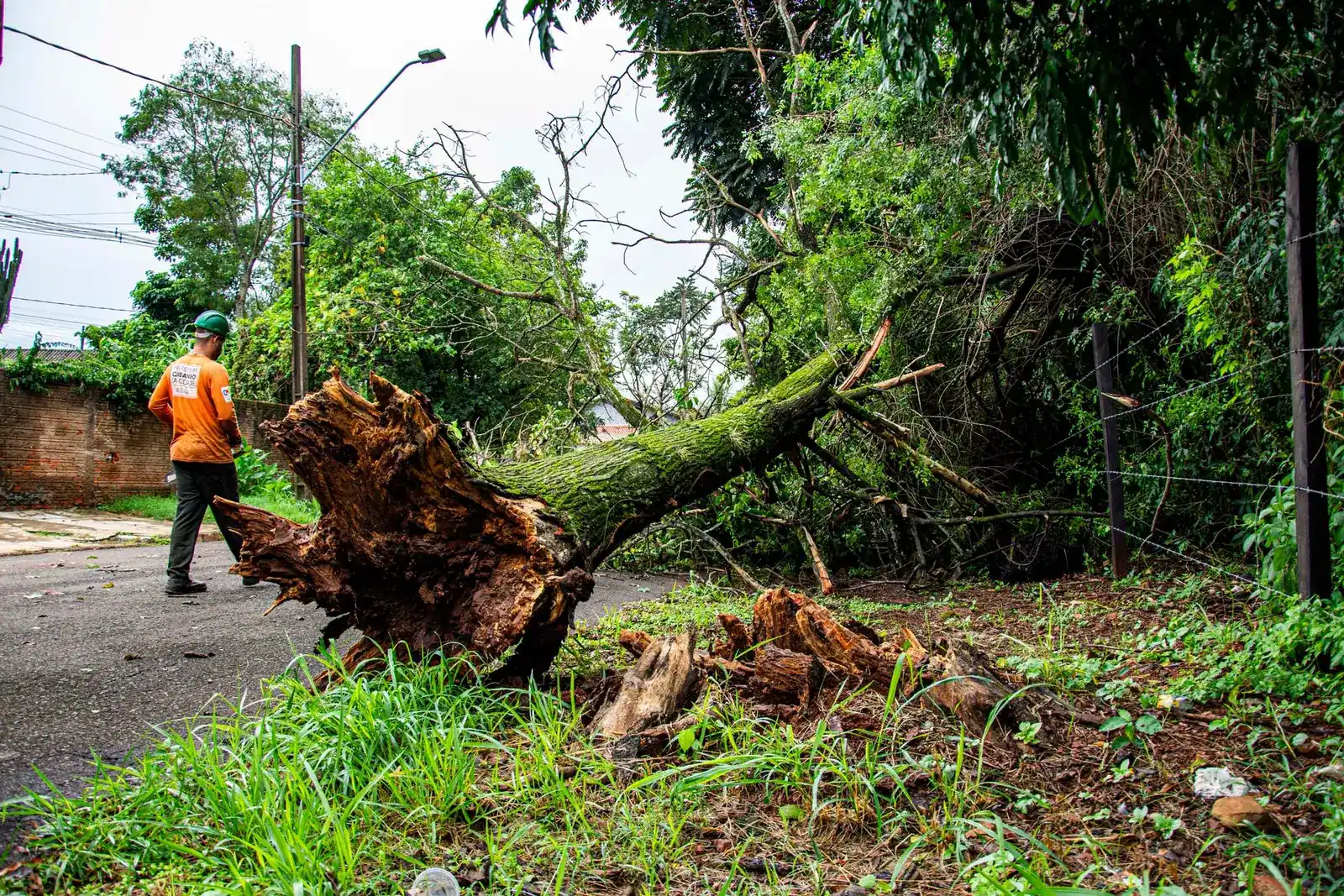
Public storm collection is another question to check with the municipality. Establish whether an announced collection covers the material, property and placement involved before paying a private hauler for the same scope. Do not infer that roadside debris on private land or a commercial cleanup qualifies for public removal.
The contract identifies what leaves the property
The FTC recommends checking contractors, comparing estimates and reviewing payment and scope terms after disaster-related offers. In debris work, name the material groups, loading location, destination, included cutting, cleanup standard and exclusions. Keep a fixed total or a clear limit on time-based charges.
Stay away from downed lines, unstable trees, damaged buildings and suspect hazardous materials. Use the utility, local authorities and trained providers responsible for those hazards. An ordinary debris removal quote is not proof that the area is safe to enter or cut.
At handover, compare the cleared areas with the agreed list. Collect disposal or scale records when those are part of the pricing, and retain approved changes to load size or material classification. Keep the storm records guide with photographs taken from safe locations and receipts.
Choose the quote that removes the agreed material through an accepted route at a clear total. That may be a fixed haul-away price, a measured load price or separate specialist work followed by ordinary removal. The cheapest disposal category is useful only when it matches the material and the entire job can reach the same endpoint.
Questions people ask
What does accepted yard-waste disposal cost in this example?
King County's 2026 self-haul schedule lists $129.38 per ton with a $20.70 minimum. Confirm the material and facility rules; that fee excludes crew labor and transportation.
Can cubic yards be converted directly to tons?
Not reliably for mixed storm debris. Material density, water and empty space vary; use the hauler's volume basis or a measured weight rather than a generic conversion.
Does branch removal include the stump?
Only if the scope includes it. Cutting, trunk hauling, stump work and ground repair can be different charges.
Should the quote name the disposal destination?
Yes. It helps establish accepted materials, the charge basis and any records needed to reconcile a weight-based bill.
Where these figures come from
- 2026 disposal fees, minimums and accepted yard waste King County Solid Waste Division · kingcounty.gov
- Disaster debris and damaged building hazards Environmental Protection Agency · epa.gov
- Contractor estimates and home improvement scams Federal Trade Commission · consumer.ftc.gov
Figures last checked October 2026.