On this page
The three options look like a price ladder and they are not. They solve different lengths of problem, and picking by price is how people end up with an expensive thing that does not cover the outage they actually get.
Key figures
- two hours a year US yearly outages excluding major events, EIA
- 11 hours US average outage duration in 2024, EIA
- 2,400 watt-hours Example: daily electricity at a 100-watt average load
The decision in one question
How long do your outages last?
Under four hours, a few times a year, is a flashlight and a phone bank problem. Overnight is a battery problem. Multiple days is a fuel problem.
The Energy Information Administration puts ordinary, non-storm interruptions at about two hours a year in total for the average US customer, while storms pushed the 2024 average to 11 hours. Your own utility’s history matters far more than either figure.
The three options, honestly
| Battery power station | Portable generator | Standby generator | |
|---|---|---|---|
| Runs indoors | Yes | Never | Outside, permanently installed |
| Noise | None | Loud | Moderate |
| Runtime | Hours, then recharge | Days, while fuel lasts | Days to weeks on gas |
| Starts itself | No | No | Yes, automatically |
| Fuel to store | None | Yes | No, if on natural gas |
| Cost | Low to medium | Medium | Highest, plus installation |
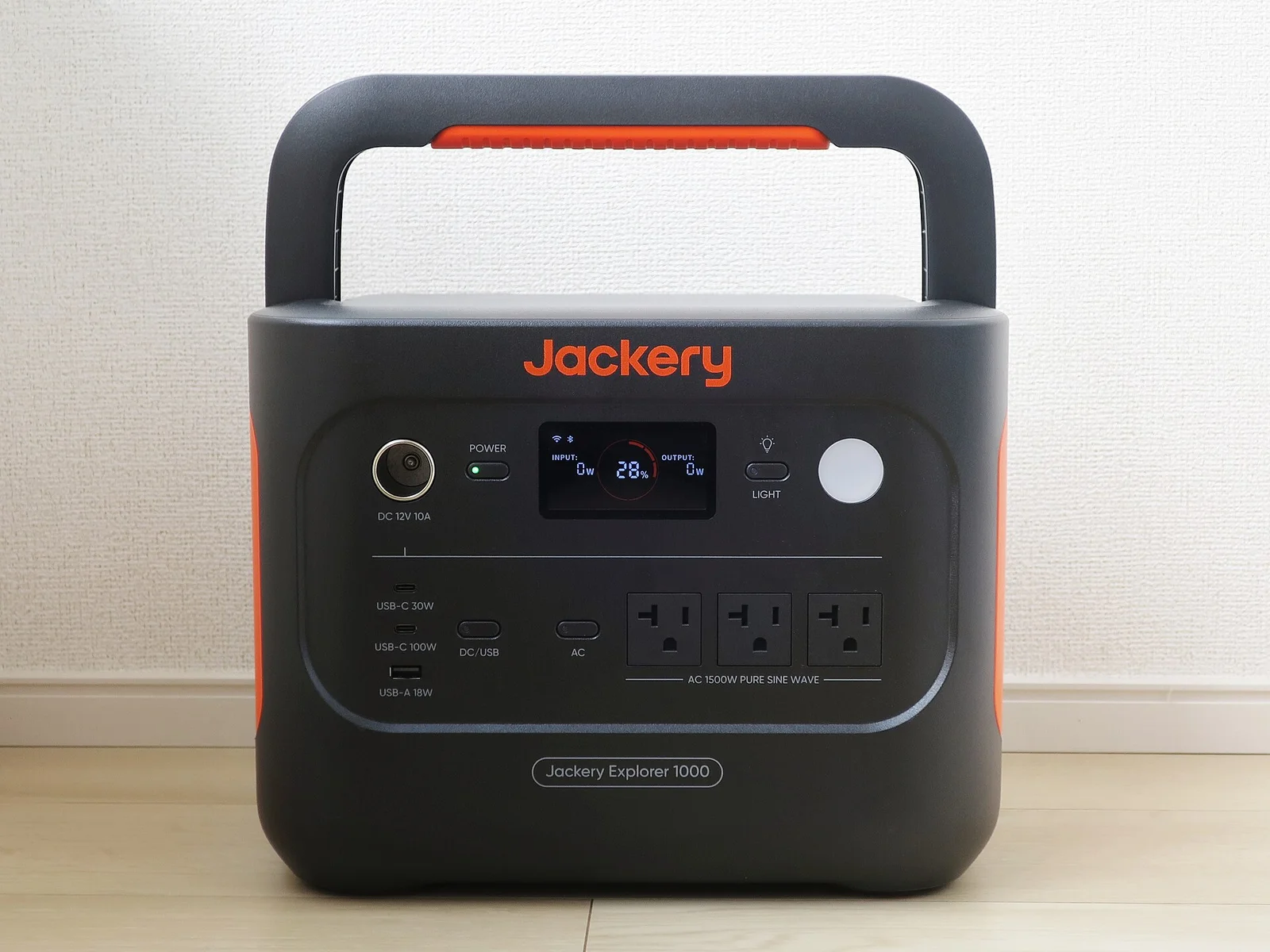
Battery power station. A large lithium battery with sockets. Silent, no exhaust, safe on the kitchen table, and rechargeable from the wall or from solar panels. It will run a fridge, phones, lights, a router and a CPAP for a night. It will not run electric heat or a well pump for long, and when it is empty in a three-day outage it is a box.
Portable generator. Fuel in, watts out, for as long as you have petrol. It must be run outdoors, at least 20 feet from the house, and it needs fuel stored safely. It is the right answer for multi-day outages if you can do that safely.
Standby generator. Permanently installed, connected to natural gas or propane, and it starts on its own when the power drops. It is the only option that works when you are not home, and the most expensive by a wide margin.
Sizing, without the sales pitch
Work in watts, and separate two numbers:
- Running watts: what a device draws continuously.
- Starting watts: the brief surge when a motor starts. Fridges, freezers, well pumps and furnace blowers can pull several times their running figure for a second or two.
Add up only what you actually need at once. A typical short list: fridge, a few lights, phone charging, router, and the furnace blower if you have gas heat. That list is usually far smaller than the generator a salesperson recommends.
For batteries, the number that matters is watt-hours, which is capacity. A fridge that averages 100 watts over a day needs about 2,400 watt-hours to run for 24 hours, minus whatever you save by keeping the door shut.
If your furnace burns gas or oil, the heat itself needs no electricity: only the blower and controls do, which is a small load. A modest battery or a small generator can keep a whole house warm.
What to check before buying anything
- Your outage history, from the utility, not from memory.
- What must keep running, medically or practically: oxygen, a CPAP, a sump pump, a well pump, refrigerated medication.
- Where fuel or a generator would live, and whether 20 feet from the house is actually possible in your garden.
- Whether you are home when outages happen. Only a standby unit works when you are not.
- What your local rules require. Permanent installations mean permits, inspections and a transfer switch.
Related reading: Four Hours, 48 Hours, and the 40 Degree Rule and A Transfer Switch Quote Needs a Complete Connection.
Questions people ask
Can a battery power station run a whole house?
Not usually, and not for long. It is sized for a fridge, lights, phones and small electronics for hours, not for electric heat, air conditioning or a well pump for days.
What size generator do I need?
Add up the running watts of the few things you need at once, then allow for the starting surge of the largest motor. That is normally much less than the units marketed for whole-house use.
Is a standby generator worth it?
If outages are long, frequent, or happen when you are away, it is the only option that works unattended. Otherwise it is a lot of money for a rare event.
Can I use a generator to charge a battery station?
Yes, and it is a good pairing: run the generator outdoors for a couple of hours to recharge the battery, then run the house silently off the battery overnight.
Where these figures come from
- Hurricanes in 2024 led to the most hours without power in the United States in 10 years US Energy Information Administration · eia.gov
- CPSC Warns of Generator, Carbon Monoxide and Fire Hazards Ahead of Hurricane Season US Consumer Product Safety Commission · cpsc.gov
Figures last checked September 2026.