On this page
A heat-pump water heater is most directly compared with an electric resistance tank it would replace. It draws heat from surrounding air rather than supplying all water-heating energy through resistance elements. The extra installed cost can be worthwhile when the household has enough hot-water demand, a workable location and electricity savings supported by the comparison.
The same benchmark does not answer a switch from gas, an existing heat-pump model or a tank that is barely used. This guide explains ENERGY STAR’s published household estimates and how to price their energy quantities. It does not prescribe equipment or report measured results from an installation.
Key figures
- About $270 Example: ENERGY STAR two-person yearly saving
- About $410 Example: ENERGY STAR three-person yearly saving
- About $550 Example: ENERGY STAR four-person yearly saving
The published benchmark separates household size and assumptions
| Household in ENERGY STAR’s example | Estimated annual kWh saved | Published annual dollar saving | Published simple payback |
|---|---|---|---|
| Two people | 1,880 | About $270 | 5.5 years |
| Three people | 2,820 | About $410 | 3.7 years |
| Four people | 3,760 | About $550 | 2.7 years |
Source note: ENERGY STAR, Benefits and Savings for Heat Pump Water Heaters, checked October 2026. The table assumes a $1,503 incremental cost, a 13-year lifespan and electricity at approximately $0.146/kWh. It compares with standard electric water heating; it is not a current installed-price quote or guaranteed household outcome.
- Two peopleAbout $270
- Three peopleAbout $410
- Four peopleAbout $550
Source note: ENERGY STAR, Benefits and Savings for Heat Pump Water Heaters, checked October 2026. The table assumes a $1,503 incremental cost, a 13-year lifespan and electricity at approximately $0.146/kWh. It compares with standard electric water heating; it is not a current installed-price quote or guaranteed household outcome.
The household counts describe the agency’s example, not a universal consumption rule. Shower length, bath use, dishwasher and laundry routines can produce different hot-water demand in households with the same number of people. Ask the provider to identify the existing heater and demand behind its saving estimate.
ENERGY STAR’s separate upgrade page rounds a four-person annual saving to approximately $600 under its presentation. Those rounded agency messages should not be treated as two precise predictions for one home. Use the explicit table assumptions when reproducing this comparison, then replace them with the project inputs.
The electricity tariff changes the dollar result
The useful transferable part of the benchmark is its stated avoided energy, provided that its equipment and demand assumptions match the comparison. Multiply the kWh reduction by the variable tariff charge the household avoids. Fixed account charges generally remain.
At EIA’s July 2026 U.S. residential average of 18.31 cents per kWh, 1,880 kWh is worth $344.23, 2,820 kWh $516.34 and 3,760 kWh $688.46. These are arithmetic values for the agency’s modeled quantities at a different benchmark price. They are not a fresh simulation of household use.
An assumed tariff of 30 cents would value the four-person benchmark at $1,128 annually. A 10-cent tariff would value it at $376. Rates therefore change simple payback even when the assumed energy reduction is unchanged. A time-of-use plan can complicate this further because water heating may occur in several price periods.
The home energy budget keeps these variable energy charges separate from the rest of the electric bill. Do not add a whole-bill percentage to the modeled water-heating saving and count the same reduction twice.
The installed premium is different from the whole purchase
The benchmark’s $1,503 incremental cost represents an assumed difference between options; it is not a manufacturer retail price or the total a contractor will invoice. An installation can include tank removal, electrical work, plumbing, drainage and location changes before the efficient model is working.
When replacement is necessary, compare two installed options that both meet demand. For a clear sensitivity case, assume the heat-pump option costs $2,000 more. At the published four-person saving of about $550 annually, simple payback is about 3.6 years. A $3,500 premium gives about 6.4 years at the same saving.
Those premiums are assumptions, not national price estimates. If a quote includes extra work that the alternative also requires, that common cost should not inflate the efficiency premium. If the new model alone requires a new drain or location, include that difference.
The water heater quote guide explains the installed scope behind equipment prices. Use the provider’s itemization to keep an advertised tank price from becoming an understated project total.
Air volume and drainage can determine installation fit
ENERGY STAR’s newer home-upgrade guidance describes many models requiring about 700 cubic feet of surrounding air and some operating with about 450. Its example of a ten-by-ten-foot room with a seven-foot ceiling contains 700 cubic feet. These are guidance examples; the selected model can have different ducting, opening and location instructions.
Other ENERGY STAR consumer guidance mentions 1,000 cubic feet. Do not select the smallest general number to justify a tight closet. Ask the installer to document the exact model requirement and whether the proposed arrangement supplies the required air exchange.
The surrounding air also becomes cooler as heat is drawn from it, and the unit creates condensate that needs disposal. A quote should include the intended drain route, any pump, service access and relevant sound expectations. These are installation questions beyond the tank capacity printed on a label.
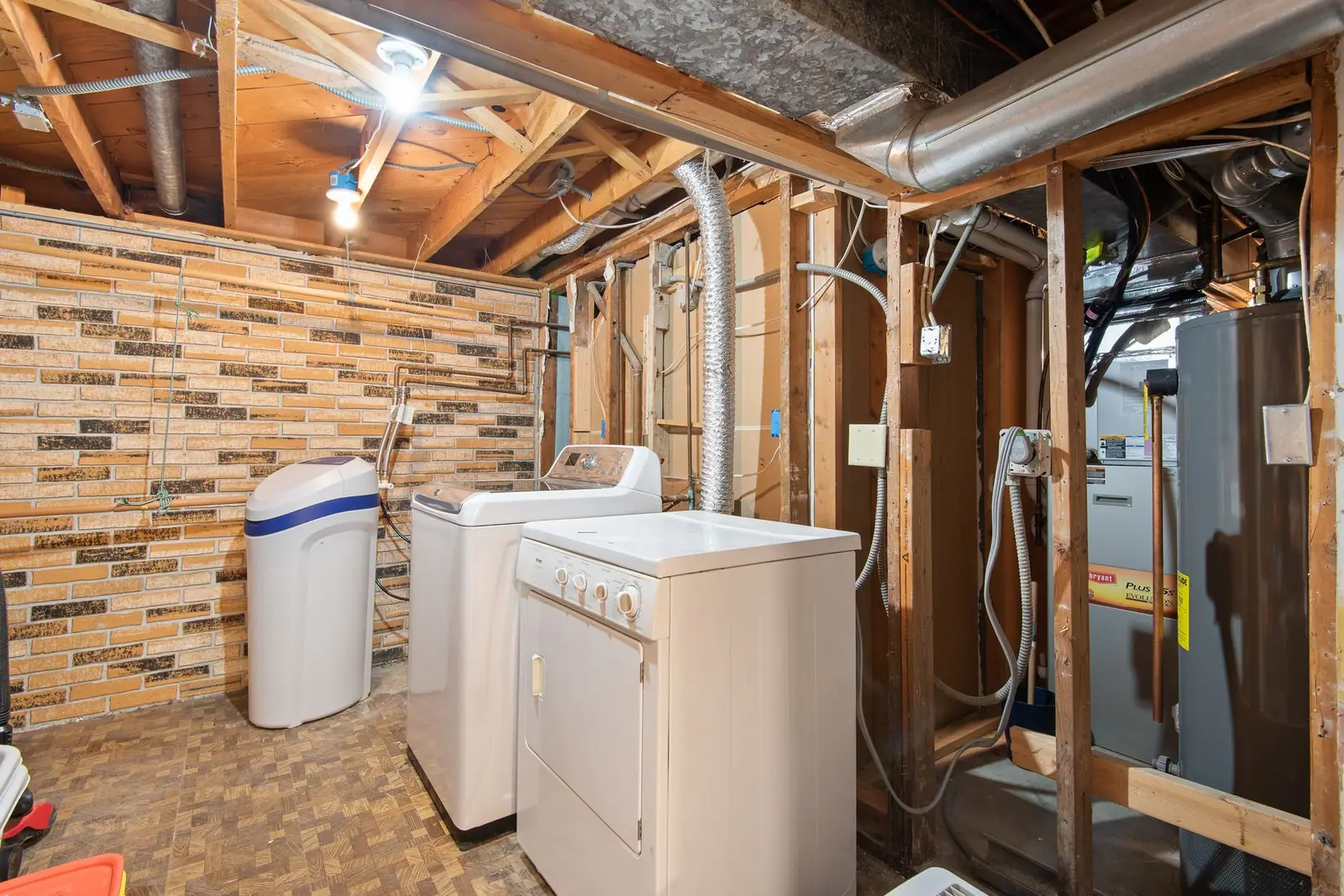
The heat-pump heating comparison concerns space heating. A water-heating heat pump and a whole-house heating system perform different jobs, so neither appliance’s savings should be imported into the other’s quote.
Incentives and operating modes require current confirmation
IRS says the federal 25C home improvement credit covers qualifying improvements through 2025. Older pages mentioning a 30% credit up to $2,000 do not establish one for an installation completed in 2026. State, utility and income-based rebate programs have separate availability and eligibility.
Show the unsubsidized installed premium and any confirmed contribution separately. A program that pays later may not reduce the money due at installation. A contractor’s estimate of eligibility is also different from the funding program’s approval.
Hybrid models can use resistance elements as part of operation. Ask how the selected operating mode meets peak demand and how the provider estimated its energy use. A saving based entirely on heat-pump operation should not be assumed when the household routinely needs another mode.
Have qualified providers assess electrical supply, water connections, condensate disposal, air access and operating conditions. Follow the selected manufacturer’s instructions; a general air-volume example or payback calculation does not establish a safe design for the house.
A good decision combines an installed premium, a supported comparison with the old heater and a location that works. Lower electric use can be valuable, but a tank that cannot meet demand or be serviced is not made suitable by a short modeled payback. Keep those requirements visible before ranking prices.
Questions people ask
How much can a heat-pump water heater save?
ENERGY STAR's explicit benchmark shows about $270, $410 and $550 annually for households of two, three and four, using standard electric storage heating as the comparison and the table's stated assumptions.
Is the $1,503 benchmark a total installed price?
No. It is the agency's assumed incremental cost used for payback. The project total and difference from another replacement depend on equipment, removal, electrical, plumbing, drainage and location work.
How much surrounding air is needed?
ENERGY STAR's newer guidance describes many models needing about 700 cubic feet and some using 450; other general pages mention 1,000. The selected manufacturer's instructions and installer assessment determine the project requirement.
Does the old $2,000 federal credit apply in 2026?
IRS says the 25C credit covers qualifying improvements through 2025. Do not assume it for a 2026 installation; verify any separate utility or state award before subtracting it.
Where these figures come from
- Heat Pump Water Heater Benefits and Savings EPA ENERGY STAR · energystar.gov
- Super-Efficient Water Heater: Installation Considerations EPA ENERGY STAR · energystar.gov
- Heat Pump Water Heaters EPA ENERGY STAR · energystar.gov
- July 2026 Residential Electricity Prices U.S. Energy Information Administration · eia.gov
- Energy Efficient Home Improvement Credit Internal Revenue Service · irs.gov
Figures last checked October 2026.