On this page
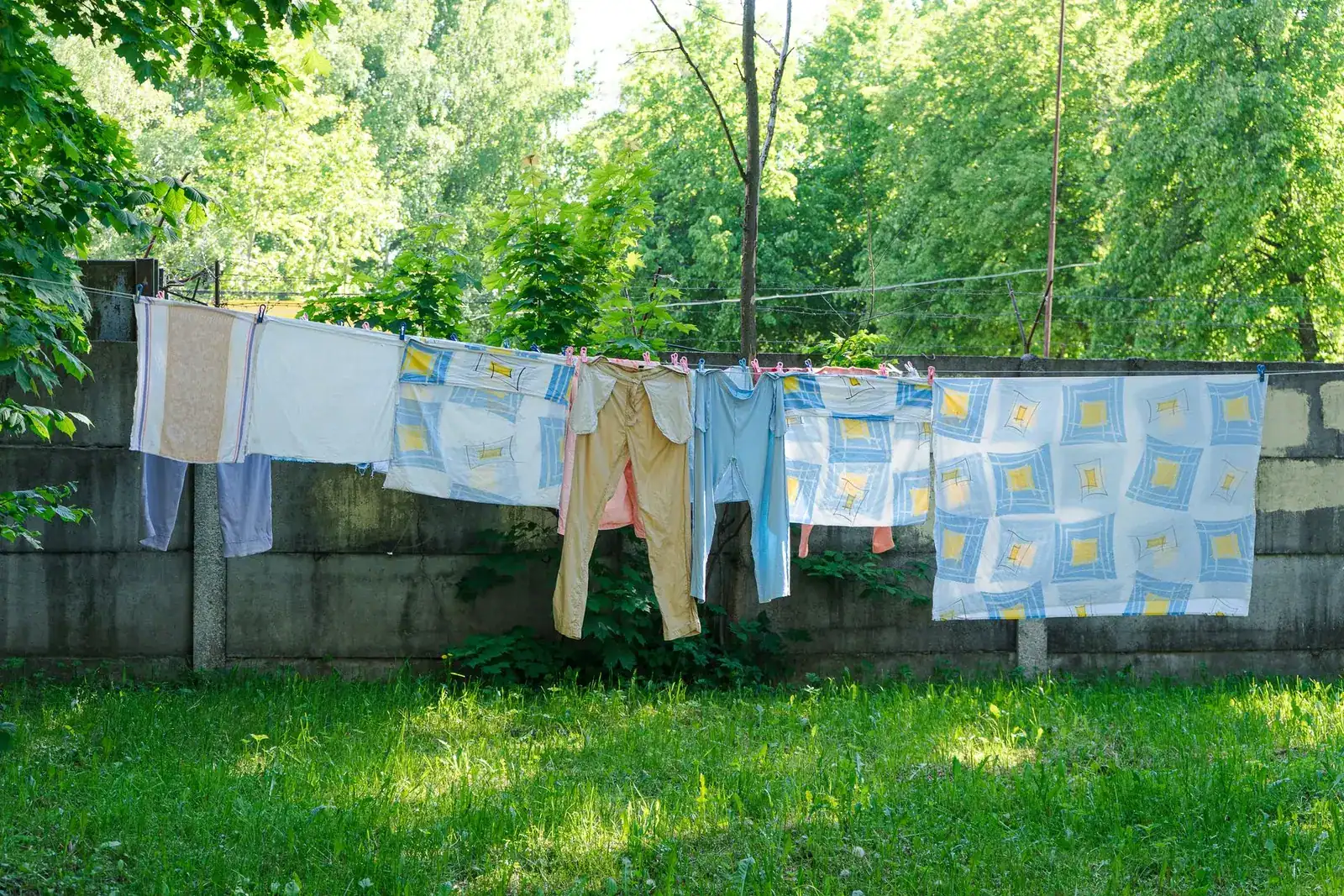
Air-drying laundry can reduce an electric dryer’s energy charges without replacing the appliance. The cash saving comes from loads that no longer need a dryer cycle, not from the number of shirts hung on a line. A household that occasionally finishes those loads in the dryer should count the remaining machine energy too.
This comparison uses published drying-equipment listings and a clearly assumed dryer load. It does not report measured performance from a particular home. The best input is the energy used for the household’s usual load and setting, followed by the number of cycles that a clothesline or rack can reliably replace.
Key figures
- $19.99 Honey-Can-Do DRY-01101 clothesline, sold out
- $29.99 Honey-Can-Do three-tier accordion rack, sold out
- $39.99 Heavy-duty Honey-Can-Do gullwing rack, sold out
Published drying-equipment listings start below $20
| Honey-Can-Do listing | Published price | Listed form or size |
|---|---|---|
| Retractable clothesline DRY-01101 | $19.99 | Eight-foot line |
| Three-tier folding accordion rack | $29.99 | Folding indoor rack |
| Heavy-duty folding gullwing rack | $39.99 | Folding rack |
| Outdoor umbrella rack | $54.99 | 165 feet of drying space |
Source note: Honey-Can-Do’s eight-foot clothesline page and its related-product listings, checked October 2026. The page marks these examples sold out; listed prices do not establish immediate availability. Mounting, tax and shipping are not included in this comparison.
- DRY-01101 clothesline, sold out$19.99
- Three-tier accordion rack, sold out$29.99
- Gullwing rack, sold out$39.99
- Umbrella rack, sold out$54.99
Source note: Honey-Can-Do's eight-foot clothesline page and its related-product listings, checked October 2026. The page marks these examples sold out; listed prices do not establish immediate availability. Mounting, tax and shipping are not included in this comparison.
The eight-foot product’s dimensions are 3.75 inches wide, 3.75 inches high and 96 inches of extended line. Its listing describes a permanently mounted housing and an opposite-wall latch. A line length is not a load-weight rating, so do not assume that an eight-foot span can hold any wet bedding without its instructions.
A portable rack uses floor space and can be moved; a fixed line needs a mounting location. Compare those tradeoffs with the laundry that will be dried. A low price does not help if the setup cannot hold the usual garments with enough separation for them to dry.
Energy per load converts directly into cents per load
Virginia Cooperative Extension gives the basic electricity calculation: watts multiplied by hours and divided by 1,000 produces kWh. For a cycling dryer, a measured full-cycle energy value is more useful than assuming its maximum label wattage is drawn continuously.
At EIA’s July 2026 national residential benchmark of 18.31 cents per kWh, an assumed 1.5 kWh cycle costs about 27 cents. A 2.5 kWh cycle costs about 46 cents, and a 4 kWh cycle about 73 cents. These are sensitivity cases, not published test results for three dryer models.
Multiply the household’s measured kWh by the variable price on its tariff. Include delivery charges that vary with consumption; fixed monthly fees remain. A time-of-use tariff can also mean the avoided evening cycle has a different price from a weekend cycle.
The appliance running-cost guide explains why rated watts and average consumption differ. A gas dryer needs a separate fuel calculation: the electric example here cannot be used as its total operating cost.
Replaced cycles determine annual savings and payback
Using the assumed 2.5 kWh cycle, replacing one load weekly over 52 weeks avoids 130 kWh and $23.80 at the benchmark rate. Three weekly loads avoid 390 kWh and $71.41; five avoid 650 kWh and $119.02. Those are annual worksheet calculations, not a forecast that every week has dry weather or enough indoor space.
At the three-load example, a $39.99 rack divided by $71.41 annual avoided charges gives roughly 0.6 years of simple payback. At one load weekly, it gives about 1.7 years. The price is a published listing with a stock limitation; the cycle consumption and frequency remain assumptions.
If a rack replaces only half of the planned cycles, the savings halve and simple payback doubles. Add clothespins, mounting or other purchased accessories to the initial total when needed. Equipment already owned has no new purchase cost, although the drying routine still requires time and space.
The home energy budget helps distinguish this small behavior-and-equipment change from replacing the dryer. Keep the full appliance purchase out of the clothesline payback unless the drying arrangement really avoids that purchase.
Weather and indoor moisture can limit the routine
Outdoor drying depends on weather, usable space and local household restrictions. A plan that relies on outdoor loads throughout the year should be checked against the seasons when the household can use the line. A backup machine cycle is part of the budget, not a failure that should be hidden from the calculation.
Indoors, the moisture removed from clothing remains in the room until it is exhausted, condensed or otherwise removed. EPA’s mold guide advises relative humidity below 60%, ideally between 30% and 50%. A rack can be inexpensive while extra moisture control reduces its net energy saving.
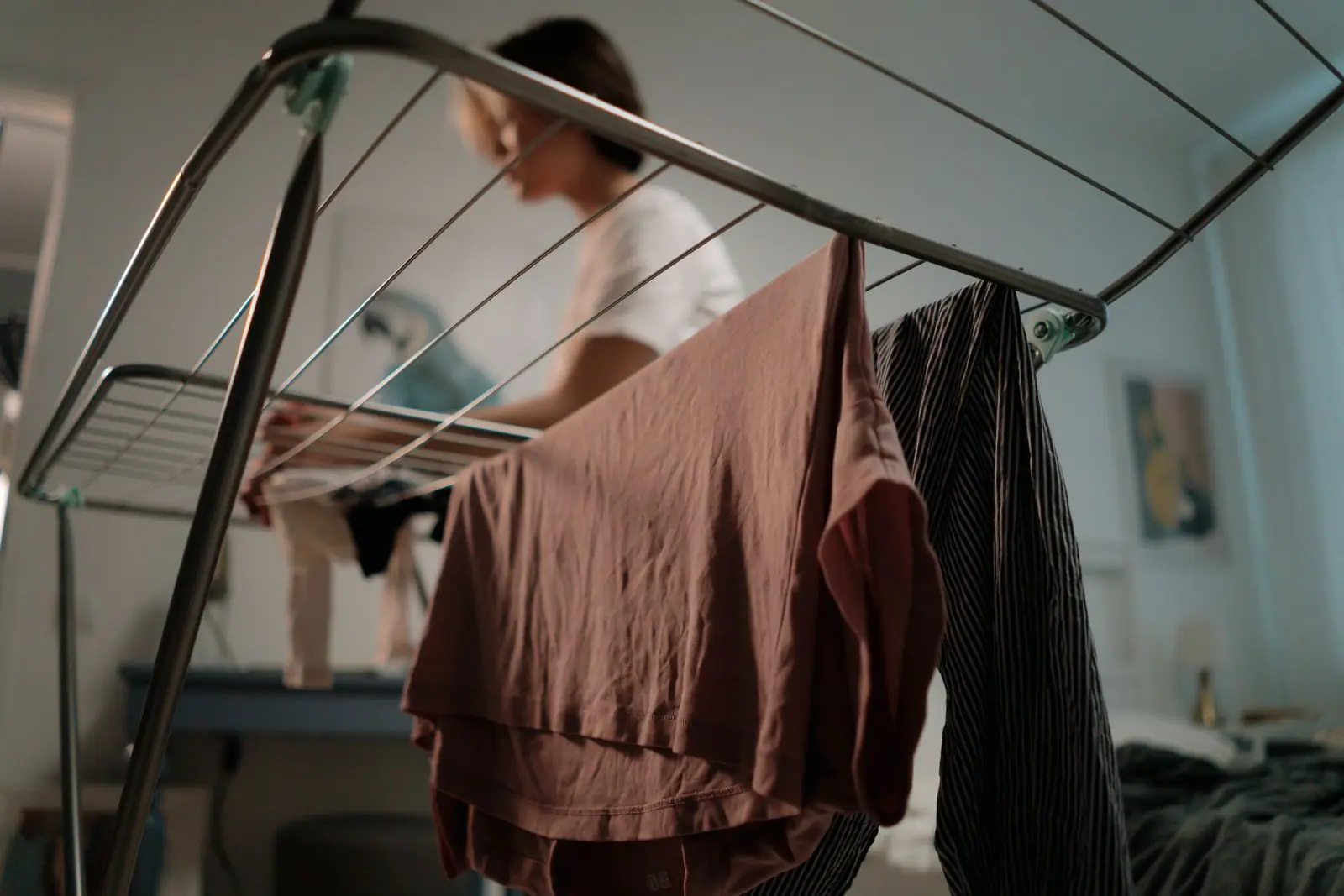
The dehumidifier running-cost guide prices that separate load. If indoor drying increases dehumidifier operation, subtract the measured extra kWh from the dryer kWh avoided. Do not assume that an unpowered rack makes the whole drying process energy-free in every room.
Follow garment and equipment instructions, keep escape paths and necessary access clear, and address persistent moisture or suspected mold with qualified help. Do not cover heaters or improvise electrical drying arrangements to speed the process.
A mixed drying routine can capture part of the saving
Air-dry garments that fit the available space and tolerate the method on their care label. Keeping the dryer for other loads can make the routine practical without claiming that every cycle disappears. Record the loads replaced over an ordinary month and use that evidence to update the annual estimate.
ENERGY STAR’s dryer guidance recommends moisture-sensor settings that stop when laundry is dry and pairing a dryer with a washer that removes more water during the final spin. Those measures can reduce the energy of retained dryer loads; the same saving should not be counted again as a completely avoided cycle.
For a future appliance purchase, the heat-pump dryer comparison evaluates an efficient machine separately. A household with high dryer use may value both a rack and an efficient replacement, but each decision needs the consumption that remains after the other change.
Questions people ask
How much does using a clothesline save per load?
Use the dryer's measured cycle energy and the household tariff. At an assumed 2.5 kWh and EIA's July 2026 national benchmark of 18.31 cents per kWh, the avoided electric charge is about 46 cents per full cycle.
What is the cost of a basic clothesline or rack?
Checked Honey-Can-Do listings show an eight-foot line at $19.99 and related racks at $29.99–$54.99. Those examples are marked sold out, so confirm a current purchasable option and any mounting or delivery cost.
Is indoor air-drying free?
The rack uses no electricity, but extra ventilation or dehumidifier operation can have a cost. Measure that additional load and watch room humidity instead of assuming that all the dryer energy becomes net savings.
Should the dryer purchase be counted in clothesline payback?
Usually compare the new drying setup with the operating cycles it replaces. Count an avoided appliance purchase only when the household can really operate without buying that appliance, including weather and backup needs.
Where these figures come from
- Eight-Foot Retractable Clothesline and Related Listings Honey-Can-Do · honeycando.com
- Estimating Appliance and Home Electronic Energy Use Virginia Cooperative Extension · vtechworks.lib.vt.edu
- July 2026 Residential Electricity Prices U.S. Energy Information Administration · eia.gov
- A Brief Guide to Mold, Moisture and Your Home U.S. Environmental Protection Agency · epa.gov
- Heat Pump Dryers and Operating Tips EPA ENERGY STAR · energystar.gov
Figures last checked October 2026.