On this page
Every list of bathroom safety products starts with hardware. The things that actually prevent falls are duller: what is underfoot, whether the person is standing at all, and whether the light is on.
What the guidance says
The National Institute on Aging’s room-by-room advice for bathrooms is compact and worth following literally:
- Place non-skid mats, strips or carpet on all surfaces that may get wet.
- Mount grab bars near toilets and on both the inside and outside of the tub and shower.
- Leave a light on in the bathroom at night, or use a night light.
And for floors generally, NIA is blunt: do not use throw rugs or small area rugs, and do not walk on slippery, newly washed floors.
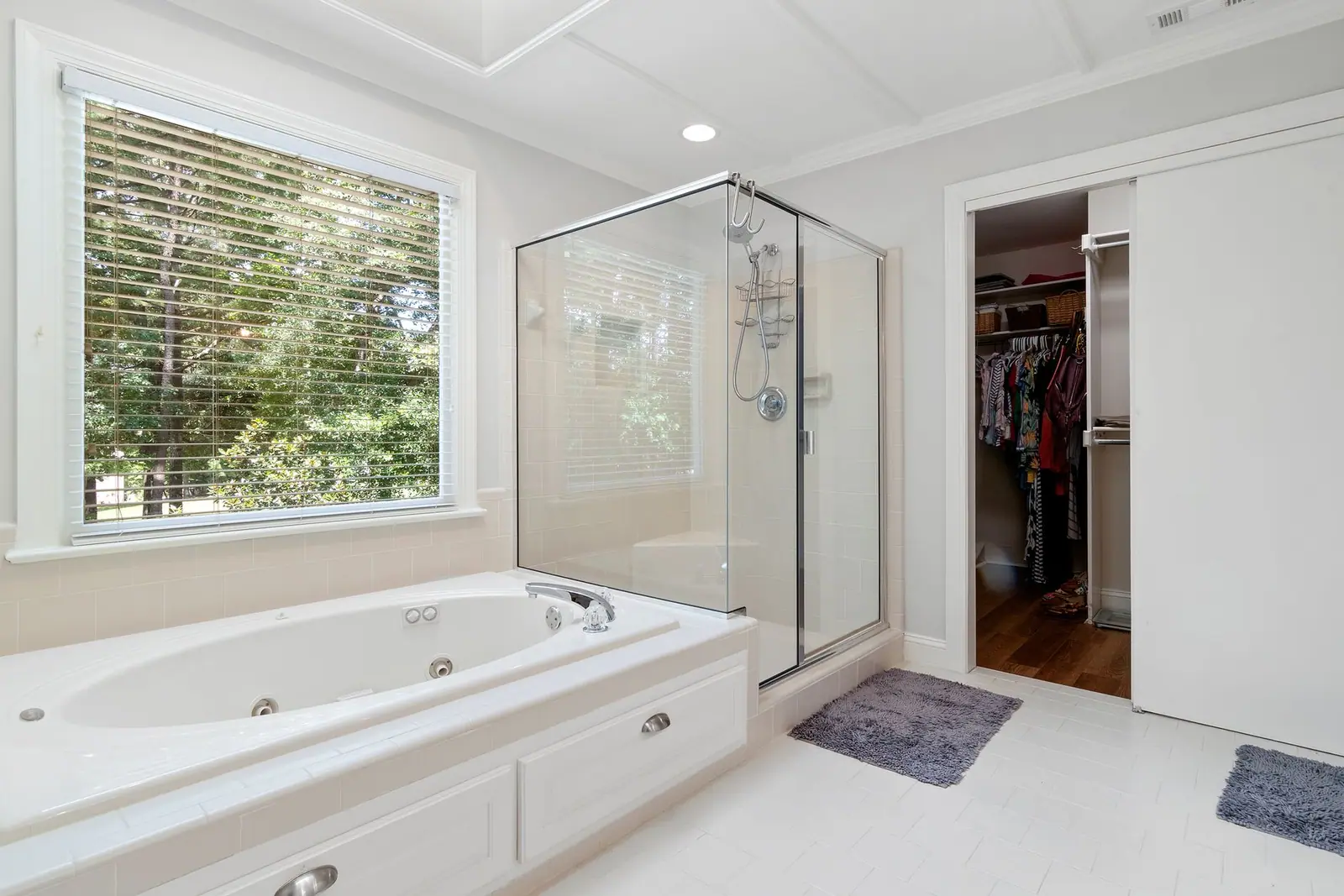
The floor itself
If a bathroom floor is being replaced, choose the surface for wet grip rather than for looks. Manufacturers publish slip ratings, and the difference between a polished and a textured version of the same tile is enormous underfoot.
Practical points:
- Small tiles with more grout lines grip better than large smooth ones.
- Textured vinyl is warm, forgiving if somebody falls and easy to keep clean.
- Highly polished stone and large-format gloss tile are the worst choice in a room that gets wet.
- Contrast matters: a floor that visually contrasts with the walls and fixtures helps somebody with poor vision judge where things are.
- Level thresholds at the door, because the lip between bathroom and hallway catches toes.
Bath mats and rugs
A bath mat is useful and it has to stay where it is put. A mat that slides on a tiled floor is worse than no mat, because it moves at the moment weight lands on it.
- Use mats with a full rubber backing, not decorative ones.
- Wash them often; soap residue makes the backing slippery.
- Replace them when the backing hardens or cracks.
- Remove every other rug from the room. NIA names throw rugs specifically, and bathrooms are where they do the most damage.
Sitting beats standing
The single most effective purchase in a bathroom is usually a shower chair or bench, with a handheld shower head on a slide rail. Together they remove standing on a wet surface, turning under running water and reaching for a fixed head.
They also make assistance possible: a helper can wash a seated person far more safely than a standing one, without both people being in the spray.
Both are inexpensive, neither requires building work, and both can be tried before committing to a conversion.
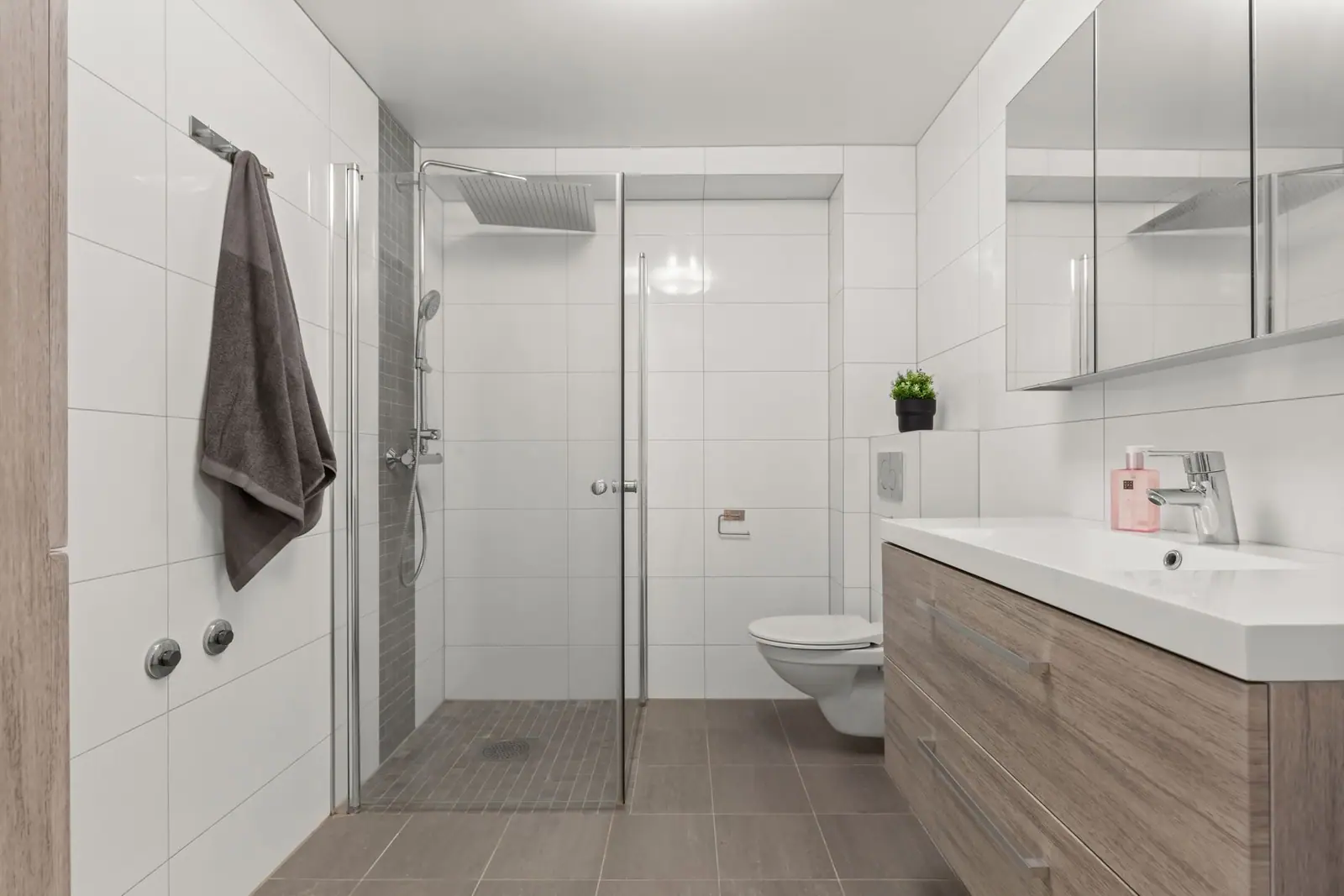
Water on the floor outside the shower is the most common bathroom hazard and the least often addressed. Fix the cause: a shower curtain that tucks in, a screen that actually reaches, a slight slope towards the drain, an absorbent mat that stays put, and a towel kept where the person steps out rather than across the room.
The night version of the same room
- Night light in the bathroom and along the route, as NIA advises.
- A switch reachable from the door, or motion-activated lighting.
- Nothing stored on the floor, including scales, bins and laundry baskets.
- A clear path from the bed, checked after anybody rearranges furniture.
- A torch by the bed, for the night the power is out.
A five-dollar audit
Walk the bathroom with the person and watch, rather than looking at the room.
- Where do their hands go? That is where bars belong.
- Where do they hesitate? That is a step, a turn or a reach that needs solving.
- Where is the water after a shower? That is the slip hazard.
- Is the light on before they enter, or do they cross the room to find it?
- Can they reach the towel, the soap and the controls while seated?
- Could a second person help in there if they needed to?
None of those questions costs anything to ask, and the answers are more useful than any product page.
Related reading: Walk-In Tub or Step-Free Shower: Decide Properly and When the Only Bathroom Is Upstairs.
Questions people ask
What is the best flooring for a safe bathroom?
A surface with good wet grip: textured vinyl or smaller tiles with more grout lines rather than polished stone or large gloss tiles. Visual contrast with the walls and fixtures helps people with poor vision, and thresholds at the door should be level.
Should older people have bath mats?
A mat with a full rubber backing that stays put is useful, and it should be washed often because soap residue makes the backing slip. Other rugs should go: the National Institute on Aging advises against throw rugs and small area rugs.
Is a shower chair worth buying?
For most people it is the highest-value purchase in the room. Combined with a handheld shower head, it removes standing on a wet surface, turning and reaching, and it makes assistance far easier. Neither requires building work.
How do I stop water getting on the bathroom floor?
Fix the cause rather than mopping the symptom: a curtain that tucks in or a screen that reaches, a slight slope to the drain, an absorbent mat that stays put, and the towel within reach of where the person steps out.
Where these figures come from
- Preventing Falls at Home: Room by Room National Institute on Aging, NIH · nia.nih.gov
- Six Tips to Help Prevent Falls National Institute on Aging, NIH · nia.nih.gov
- Falls and Falls Prevention National Institute on Aging, NIH · nia.nih.gov
Figures last checked September 2026.