On this page
Kitchens and bedrooms are designed around a person who can reach, bend and stand for a while. When that changes, the house does not, and the adaptations people make themselves are usually the dangerous ones: a chair used as a step, a bed that is too high, a saucepan carried across a room.
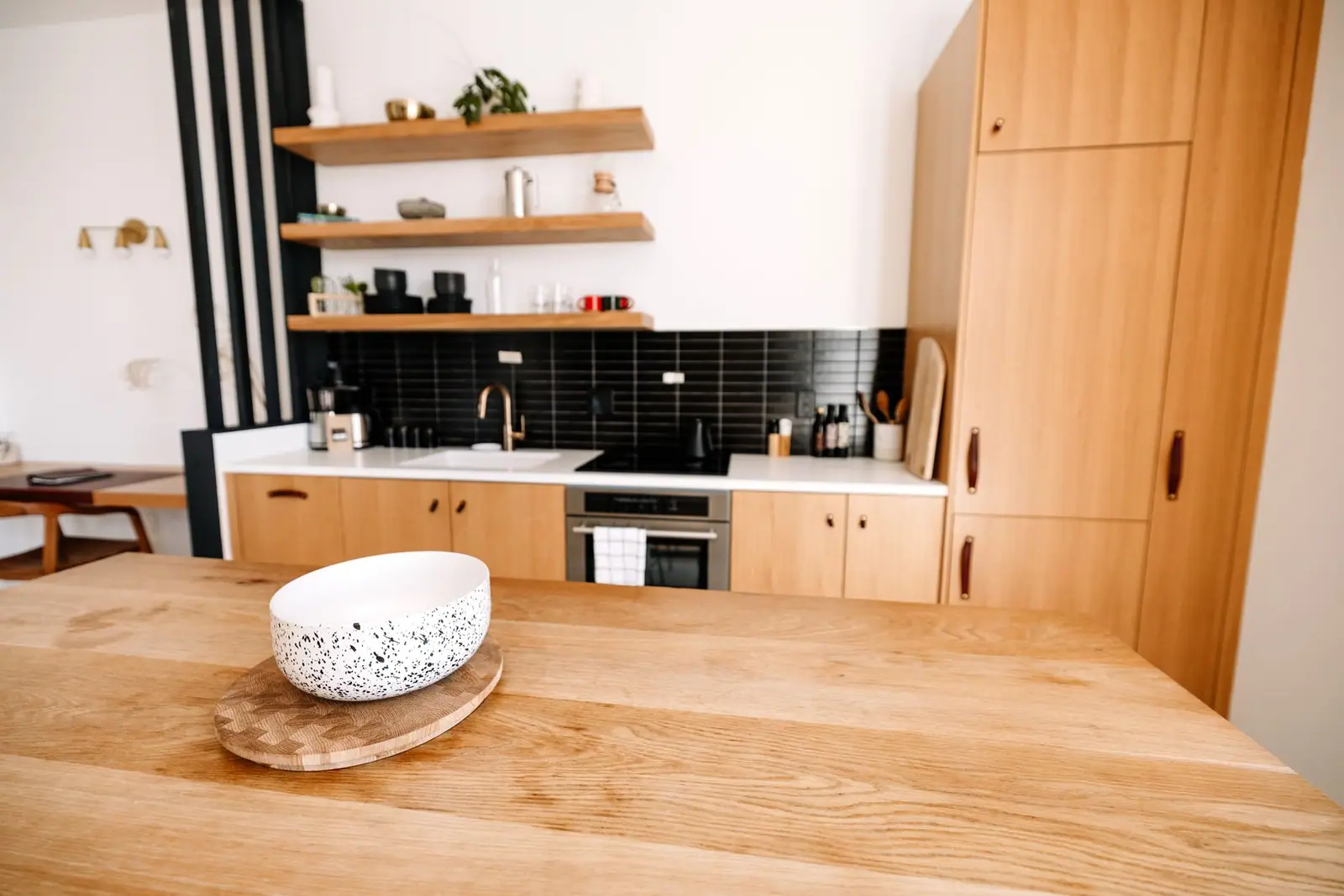
The kitchen, without a renovation
Most of the problem is where things are, not how the kitchen is built.
- Move daily items to between hip and shoulder height. Everything used every day should be reachable without stretching or bending.
- Put heavy things low, not high. A full pan lifted down from above the head is how wrists and shoulders get injured.
- Fit pull-out shelves in base cabinets. They turn a deep dark cupboard into something reachable without kneeling.
- Add lazy susans in corner units, which are otherwise unusable.
- Use a kettle tipper or a lighter kettle, and a trolley for moving things across the kitchen rather than carrying.
- Replace cabinet knobs with D-shaped handles, which weak hands can hook rather than pinch.
- Get rid of the step stool, and be firm about it. If something can only be reached from a stool, it is in the wrong place.

The kitchen, with building work
If the kitchen is being redone anyway, this is when to think about the next twenty years.
- A lowered section of counter, usable seated, with knee space beneath.
- A shallower sink, which brings the bottom up and reduces bending.
- A single-lever or touch tap, operable with a closed hand.
- Drawers instead of base cupboards, because a drawer brings its contents out to you.
- Induction or a flat cooktop with front controls, so nobody reaches over a hot pan.
- Task lighting under the cabinets, where the knives are used.
- Contrast between worktop and floor, so edges are visible.
Two funding notes worth knowing: the VA’s HISA grant lists lowering counters and sinks among the improvements it covers, and the IRS lists lowering or modifying kitchen cabinets and equipment among improvements that usually do not increase a home’s value, so the cost can be included in full as a medical expense for households that itemise.
The bedroom, which is mostly free
Move it downstairs. If there is a room on the ground floor near a bathroom, this is often the single most useful change available, and it costs nothing but furniture moving and a conversation.
Get the bed height right. Feet flat on the floor when sitting on the edge, knees at roughly ninety degrees. Too high and getting down is a drop; too low and getting up is a squat. Bed risers or a different frame fix it.
Clear the route to the door, and light it.
A firm chair in the room, with arms, for dressing.
A phone and a torch within reach of the bed, plus water and any medication that may be needed at night.
Bed rails, carefully. They help some people rise and they carry real risks of entrapment for people who are confused or frail, so ask the occupational therapist rather than buying one on the strength of a product page.
The single biggest predictor of whether somebody manages at home is not the kitchen or the bathroom in isolation. It is whether the daily route works: bed, bathroom, kitchen, chair, door. Walk that loop and fix it in order. A beautiful adapted bathroom at the end of an obstacle course is not an adapted house.
Small hardware, large effect
- Reacher grabbers, kept in the rooms where they are used rather than one for the whole house.
- A trolley with a handle, so things get pushed rather than carried.
- Lever taps in kitchen and bathroom.
- Automatic shut-off kettles and stove timers, where memory is a concern.
- A cordless phone or mobile carried in a pocket, so a fall does not mean crawling to a handset.
- Non-slip mats under cutting boards and bowls, which keeps both hands free for the task.
Most of that list costs less than one hour of a contractor’s time, and it removes the daily stretches and carries that eventually produce the fall everybody was worried about.
Related reading: How Much Does a Home Medical Alert System Cost? and Older Eyes Need More Light Than You Think.
Questions people ask
How do I make a kitchen safer for an older person?
Start by moving everything used daily to between hip and shoulder height, putting heavy items low, adding pull-out shelves and lazy susans, and removing the step stool. Those changes cost little and solve most of the reaching and bending problem.
Is lowering kitchen counters covered by any programme?
The VA's HISA grant lists lowering counters and sinks among the improvements it covers for eligible veterans. The IRS also lists lowering or modifying kitchen cabinets and equipment as an improvement that usually does not increase a home's value, so the cost can count in full as a medical expense.
What is the right bed height for an older adult?
High enough that they can sit on the edge with feet flat on the floor and knees at roughly ninety degrees. Too high makes getting down a drop, too low makes rising a squat. Bed risers or a different frame usually fix it.
Are bed rails a good idea?
Sometimes, and not automatically. They help some people turn and rise, and they carry real entrapment risks for people who are frail or confused. Ask an occupational therapist about the specific person rather than buying on the strength of a product description.
Where these figures come from
- Home Improvements and Structural Alterations (HISA) US Department of Veterans Affairs · prosthetics.va.gov
- Publication 502, Medical and Dental Expenses Internal Revenue Service · irs.gov
- Preventing Falls at Home: Room by Room National Institute on Aging, NIH · nia.nih.gov
Figures last checked September 2026.