On this page
Most well test results can wait for a conversation. Nitrate is the one to act on the same week, because the group at risk is the one least able to wait and because the usual household fixes do not work on it.
Key figures
- 10 mg/L EPA public-water nitrate limit, measured as nitrogen
- 1 mg/L EPA public-water nitrite limit
The number
EPA’s national primary drinking water regulations set the maximum contaminant level for nitrate at 10 mg/L measured as nitrogen, and for nitrite at 1 mg/L. Those limits are legally binding on public water systems, and they are the benchmark a laboratory will compare your private well against.
Check the units on your report. Nitrate is sometimes reported as nitrate-nitrogen and sometimes as nitrate ion, and the numbers differ by a factor of about 4.4. A result of 44 mg/L as nitrate is roughly 10 mg/L as nitrogen, which is the limit, not four times it.
Why it matters most to infants
Nitrate interferes with the blood’s ability to carry oxygen, and infants under about six months are far more susceptible than older children or adults. In practical terms the exposure that matters is formula mixed with well water.
If your nitrate result is near or above the limit and there is a baby in the house, or one on the way:
- Use bottled water for formula until the problem is fixed and retested.
- Do not boil the water to make it safer. Boiling evaporates water and leaves the nitrate behind, so the concentration goes up.
- Tell your doctor or midwife the actual number rather than “it was a bit high”.
Pregnancy is a reason to test and to take a high result seriously as well. The same advice applies: get the number, and get advice from a clinician rather than a website.

Where it comes from
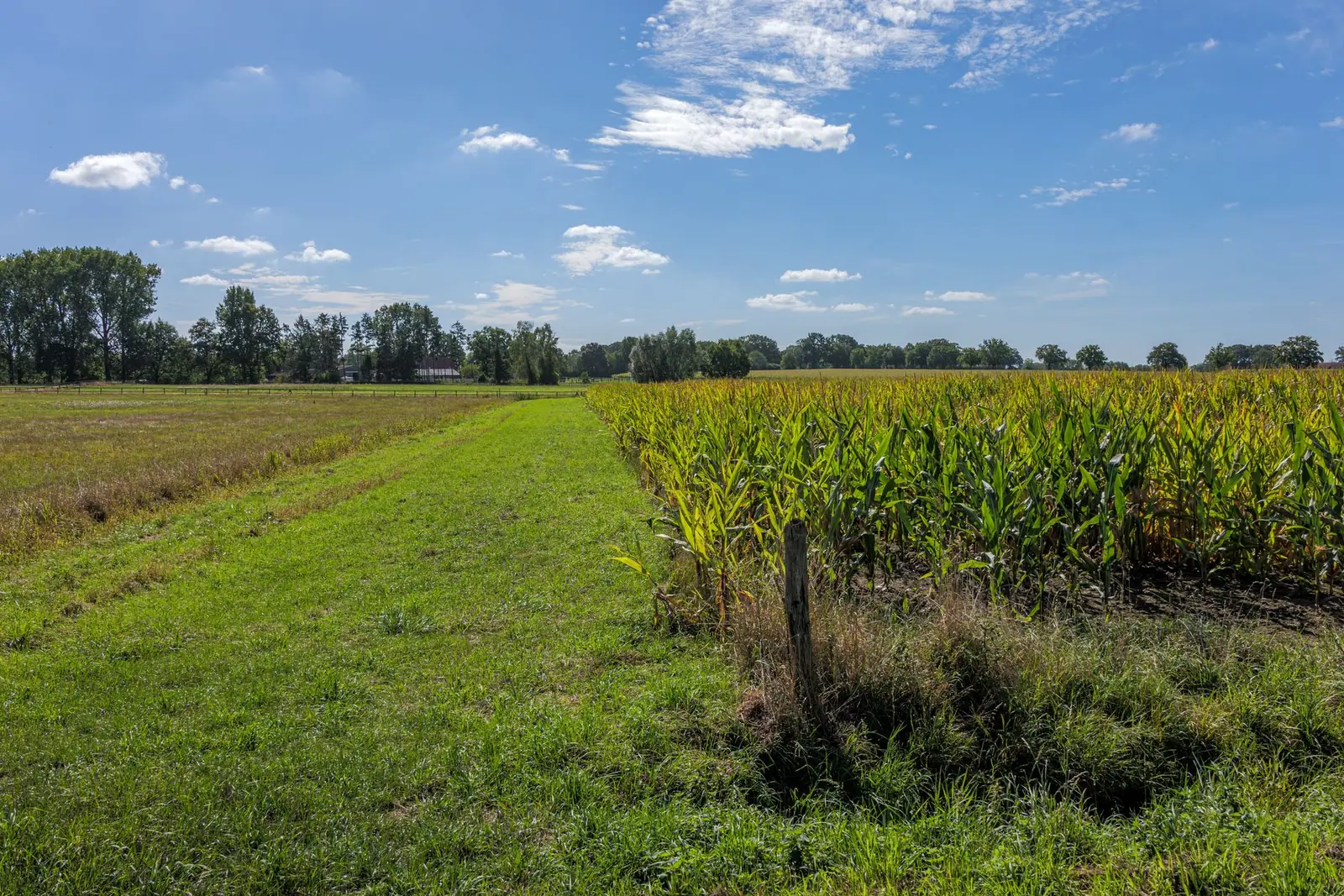
USGS lists nitrate among the contaminants most often found above health benchmarks in private wells, and notes that while it has natural sources, elevated levels usually come from human activity such as septic systems and fertiliser, with higher concentrations in agricultural areas.
On a specific property, the usual suspects are:
- Fertiliser, on your land or a neighbour’s, especially on sandy soils.
- Livestock, manure storage and feedlots uphill of the well.
- A septic system that is too close, failing, or upgradient of the well.
- A shallow well, which sees surface influence far more than a deep one.
- A poorly sealed well: a cracked casing, a missing cap or a wellhead below grade lets surface water bypass the aquifer entirely.
That last point is the one people miss. A high nitrate result is sometimes a well construction problem rather than a groundwater problem, and it is worth checking before buying treatment.
What removes nitrate, and what does not
Works:
- Reverse osmosis, usually installed under the sink for drinking and cooking water.
- Ion exchange designed for nitrate, whole-house but needing regeneration and careful setup.
- Distillation, slow and small-scale but effective.
Does not work:
- Boiling. It concentrates nitrate.
- Ordinary carbon filters, including jug filters and most fridge filters, which are made for taste, chlorine and some organics.
- Softeners. A standard water softener exchanges hardness ions, not nitrate.
- Sediment filters and UV. Useful for other problems, irrelevant to this one.
When you buy treatment, look for equipment certified to the relevant NSF/ANSI standard for the contaminant you are treating, and keep the maintenance schedule. Reverse osmosis membranes and ion exchange resin both have a service life, and an unmaintained system quietly stops working.
Treat a nitrate result as information about your well’s relationship with the surface. If nitrate is present, ask the laboratory to check coliform bacteria too, because the same pathway that brings nitrate down can bring bacteria. Fixing the pathway, a cracked casing, a wellhead in a hollow, a failing septic system upgradient, is a better outcome than treating the symptom for the next twenty years.
A sensible sequence after a high result
- Confirm it. Retest, at the same tap and at a tap before any treatment, and check whether the units on both reports match.
- Stop the infant exposure immediately if there is a baby in the house.
- Inspect the wellhead: cap in place and sealed, casing sound, ground sloping away, no ponding, no pit.
- Map the surroundings: where is the septic tank and drainfield, which way does the land slope, what is farmed nearby.
- Test again seasonally. Nitrate often peaks after fertiliser application and heavy recharge, so one low result in August does not clear a well.
- Then choose treatment for the water you drink and cook with, and keep testing after it is installed to confirm it is working.
Related reading: Nobody Tests Your Well Water Except You and The PFAS Rules Do Not Cover Your Well.
Questions people ask
What is a safe level of nitrate in well water?
The federal limit for public water is 10 mg/L measured as nitrogen, and that is the benchmark used for private wells. Check the units on your report, because results given as nitrate ion are about 4.4 times the nitrate-nitrogen figure.
Does boiling water remove nitrate?
No, it makes it worse. Boiling evaporates some of the water and leaves the nitrate behind, so the concentration rises. Removal requires reverse osmosis, ion exchange designed for nitrate, or distillation.
Why is nitrate dangerous for babies?
Infants under about six months are much more susceptible to nitrate's effect on the blood's ability to carry oxygen. The exposure that matters in practice is formula mixed with well water, so use bottled water until the well is fixed and retested, and speak to a clinician with the actual test number.
Where does nitrate in a well come from?
Usually from the surface: fertiliser, manure and livestock, or a septic system that is too close, failing or upgradient. A poorly sealed wellhead or a shallow well makes any of those far more likely to show up in your water.
Where these figures come from
- National Primary Drinking Water Regulations US Environmental Protection Agency · epa.gov
- Contamination in U.S. Private Wells US Geological Survey · usgs.gov
- Protect Your Home's Water US Environmental Protection Agency · epa.gov
Figures last checked September 2026.