On this page
Roaches that come back two weeks after the spray are not a sign that the spray was weak. They are a sign that it was the wrong tool for an insect that breeds faster than almost anything else in the house.
Key figures
- about 30 UC IPM young per German cockroach egg case
- over 30,000 Potential yearly descendants from one female cockroach
Which cockroach you have matters
UC IPM splits the common pest species into two groups.
- Indoor species: the German cockroach and the brownbanded cockroach live exclusively indoors. They breed in your kitchen and bathroom and they are the ones that turn into an infestation.
- Outdoor species: American, Oriental, Turkestan and field cockroaches live mostly outdoors, in drains, mulch and sewers, and occasionally invade buildings.
The difference changes the fix. Outdoor roaches that wander in are a sealing and drainage problem. German cockroaches are a colony already living inside your cabinets.
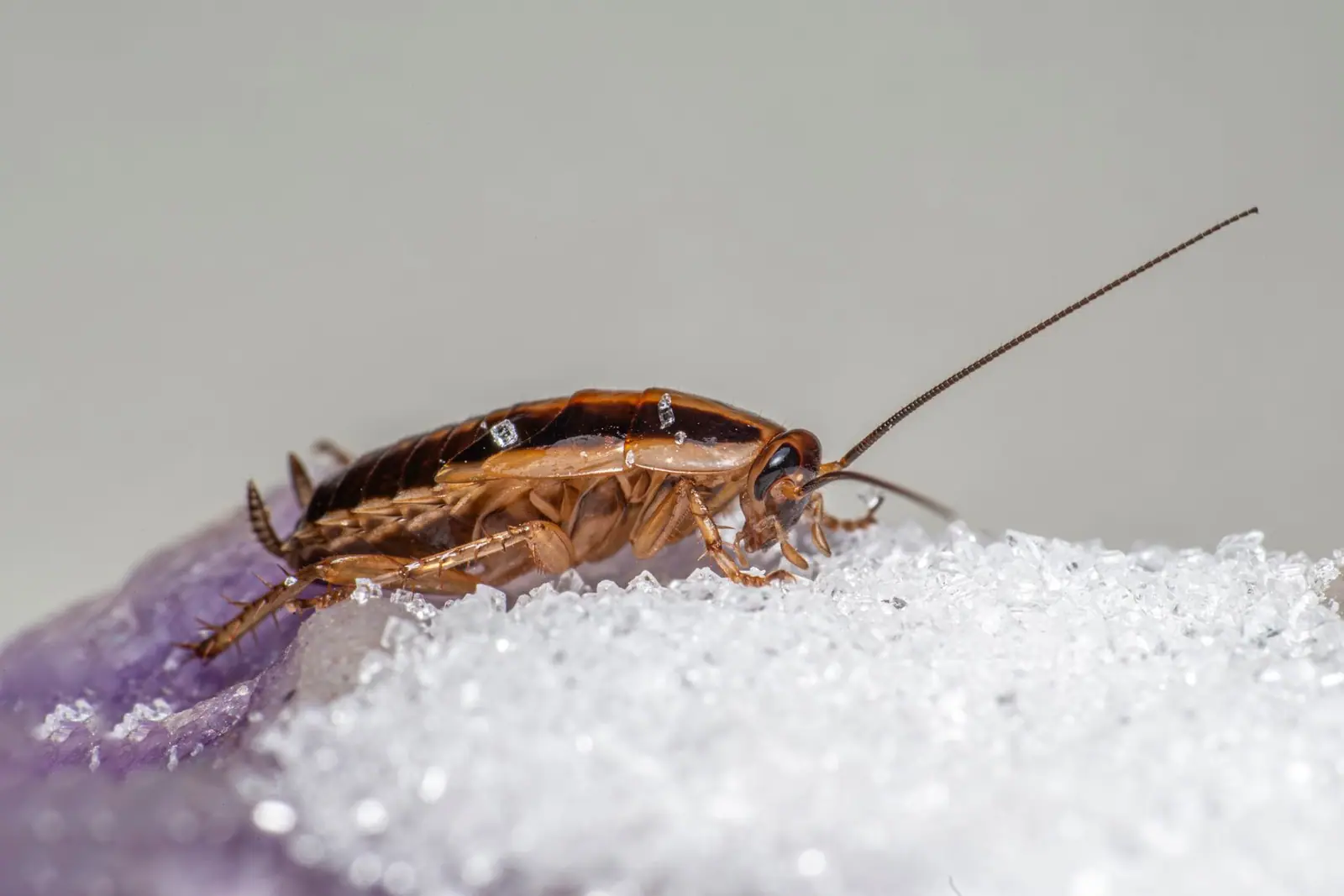
German cockroaches are small, light brown, with two dark stripes behind the head, and they are most often found in kitchens and bathrooms, close to warmth, food and water.
Why they outrun sprays
UC IPM’s figures explain everything. Each German cockroach egg case contains about 30 young, a female may produce a new case every few weeks, and this species has the fastest reproductive cycle of all the common pest cockroaches: a single female and her offspring can produce over 30,000 individuals in a year.
The female also carries her egg case on her body until a day or two before it hatches, according to UC IPM, so the next generation spends its incubation wherever she hides, out of reach of anything sprayed in the open.
A spray kills what it touches. The roaches it touches are the foragers, not the females and nymphs tucked behind the fridge. Within weeks, the next generation walks out.

Why bait works
UC IPM describes bait products as the primary pesticides used to treat cockroach infestations. The reasons:
- They go where the roaches are. Gel baits are placed in small dabs in cracks, hinges and corners, right at the harborage.
- Roaches eat them and spread them. Roaches that feed return to the colony and die there, where others contact them.
- They last. A bait placement keeps working for longer than a spray residue that gets wiped off a counter.
The same guide warns that foggers and aerosol sprays are often ineffective since they do not reach the crevices, and may repel and disperse roaches to other parts of the building. Its summary is blunt: when using insecticides, baits provide better control than sprays.
For wall voids and the hollow spaces behind cabinets, UC IPM describes boric acid dust as the most common active ingredient against cockroaches. It is not repellent, and if it stays dry and undisturbed it keeps working for a very long time.
Sanitation is half the treatment
Bait competes with every other food source in the room. The less there is, the faster bait works. UC IPM’s advice is specific: store food in insect-proof containers such as glass jars or resealable plastic, and keep trash in containers with tight-fitting lids. Even tiny food particles can sustain an infestation.
In practice:
- Wipe grease from the stovetop, the wall behind it and the extractor hood.
- Clean under and behind the fridge, stove and dishwasher, where crumbs collect.
- Fix drips under sinks and around the dishwasher.
- Empty pet bowls at night, or at least do not leave kibble out.
- Get rid of cardboard stored in the kitchen, which roaches love.
- Do not leave dishes in the sink overnight.
Sticky traps are the cheapest diagnostic tool you have. UC IPM calls them the best way to detect and monitor cockroach populations. Put several around the kitchen and bathroom, check them after a few days, and you will see which spot has the most. That is where the bait goes first, and a week later the same traps tell you whether it is working.
What to expect from a professional
If you hire someone, a good German cockroach program looks like this:
- Inspection with a flashlight into hinges, under sinks, behind appliances, around the dishwasher.
- Monitoring traps placed and dated.
- Gel bait placed in many small dabs in harborages, not one big blob.
- Dust in voids where bait cannot go, applied lightly and out of reach.
- A return visit to check traps and rebait.
- Sanitation notes for you, in writing.
Be cautious of a service that arrives, sprays the baseboards and leaves. That is the spray cycle, and UC IPM’s figures explain why it fails.
In an apartment
German cockroaches travel through wall voids, pipe runs and shared drains. Treating one unit while the neighbors have an active colony means reinfestation. Tell your landlord in writing, and ask whether adjacent units will be inspected.
Related reading: A Bed Bug Encasement Is Part of a Wider Control Plan and Build a Pest Budget Around the Problem You Actually Have.
Questions people ask
Why do cockroaches keep coming back after spraying?
Because sprays kill the roaches they touch and miss the females and egg cases hidden in crevices. German cockroaches reproduce very fast: UC IPM says one female and her offspring can produce over 30,000 in a year. Sprays can also scatter roaches into new areas.
What is the best way to get rid of German cockroaches?
Gel baits placed in cracks and harborages, combined with strict sanitation and sticky traps to monitor. UC IPM describes baits as the primary pesticides for cockroach infestations.
Are big roaches and small roaches the same problem?
No. The small German and brownbanded cockroaches live only indoors and breed inside. The large American and Oriental cockroaches live mostly outdoors and occasionally wander in, so sealing, drainage and outdoor conditions matter more.
Should I spray as well as using bait?
UC IPM advises against foggers, bombs and aerosol sprays for cockroaches, since they can repel and disperse roaches without killing them, and says baits provide better control than sprays. Let the bait work and use sticky traps to watch progress.
Where these figures come from
- Cockroaches Management Guidelines University of California Statewide IPM Program · ipm.ucanr.edu
- Introduction to Pesticide Labels US Environmental Protection Agency · epa.gov
Figures last checked September 2026.