On this page
Most of what goes wrong with a stove installation is geometry. The appliance is fine, the chimney is fine, and the stove sits eight inches too close to a wall that was never meant to be that warm, year after year, until the timber behind the plaster has been slowly cooked into something that ignites at a far lower temperature than fresh wood.
Two sets of numbers
The household rule. The US Fire Administration puts it simply: keep anything that can burn at least 3 feet from all heat sources, including fireplaces, wood stoves, radiators, space heaters and candles. That is the rule for furniture, curtains, kindling baskets, drying laundry and children.
The listed clearances. These are the distances in the manufacturer’s installation instructions: stove to rear wall, stove to side wall, connector pipe to ceiling, and so on. They come from the testing that certified the model, they differ between models, and they are what a building inspector measures. Where the two differ, the manual governs the installation and the three-foot rule governs how you live with it.
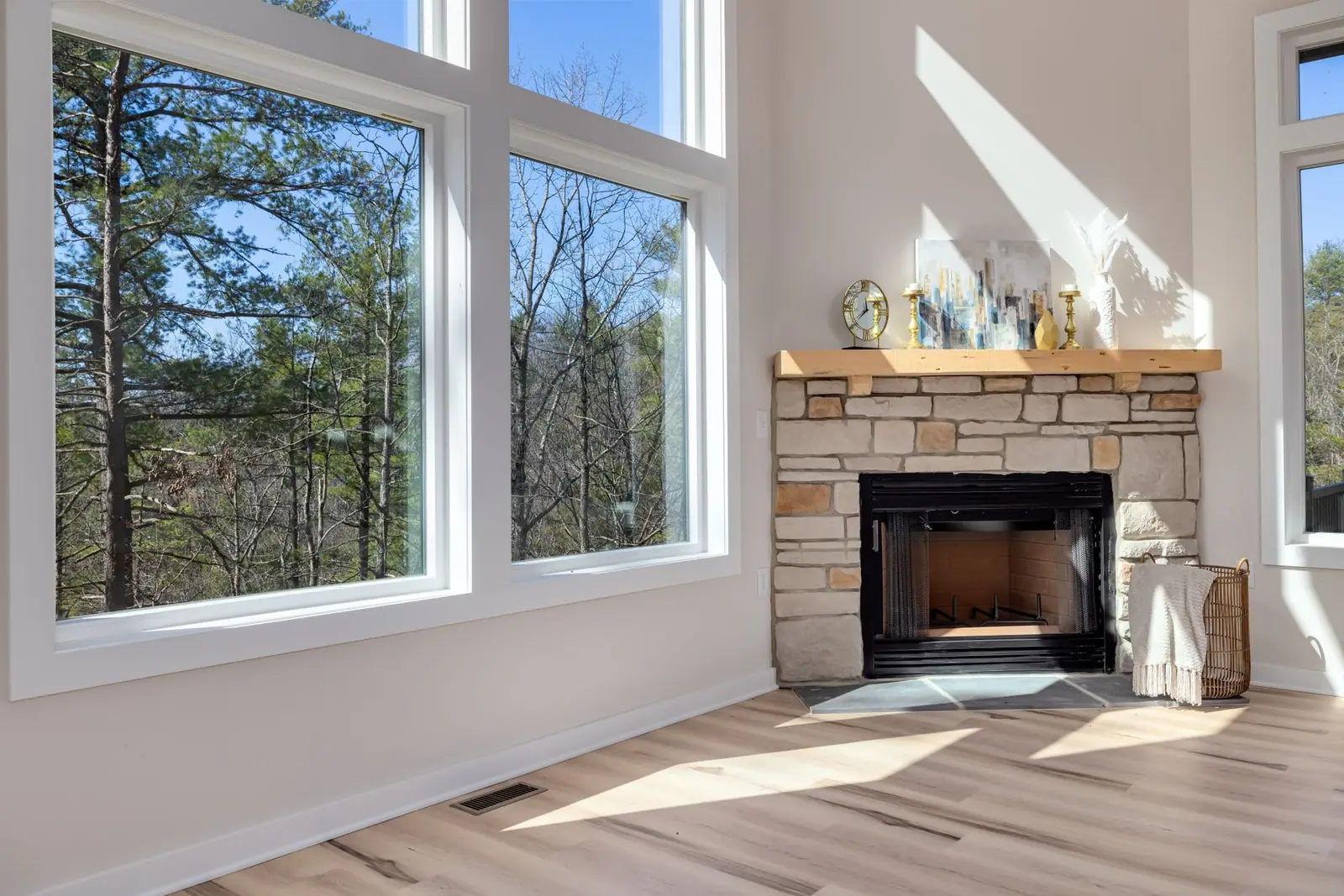
Floor protection
Every stove’s manual specifies floor protection, in two dimensions:
- Extent. How far the pad must project in front of the loading door and to the sides, so that embers and ash fall onto something non-combustible.
- Performance. Either a simple non-combustible requirement, or a thermal rating expressed as an R value or K value, depending on the appliance and how close the firebox sits to the floor.
A slab of stone on a wooden floor is not automatically compliant: stone conducts heat well, and some stoves need an insulating layer beneath, not just a hard surface. Read the specification and buy a pad that states it meets it.
Heat shields, and what they do
Where a room cannot give a stove its full clearance, a shield can sometimes reduce the distance required. Two rules:
- Use what the manual allows. Many manufacturers publish reduced clearances with their own shields, or with a specified air-gapped assembly.
- An air gap is the point. A shield works by keeping a ventilated space between it and the combustible wall, which lets air carry heat away. A sheet of metal screwed flat to plaster is not a heat shield; it is a hot plate.
Anything improvised should be checked with the inspector before the stove is lit, not after.
The connector pipe from stove to chimney has its own clearances, and it is the part most often placed too close to a ceiling or a shelf. Single-wall pipe typically needs far more space than double-wall connector pipe. If the room is tight, changing the pipe type is often cheaper than moving the stove.
The permit and the inspection
Installing or replacing a solid-fuel appliance is normally a permitted job. The process is worth welcoming rather than avoiding:
- The inspector checks the installation against the listed instructions, which is the same document your insurer will ask about if anything happens.
- The permit creates a record that the appliance was installed correctly, which matters at sale.
- Many insurers ask whether a wood-burning appliance is professionally installed and inspected, and some ask for documentation.
Keep the permit, the inspection sign-off, the manual, a photograph of the certification label and the installer’s invoice in one folder.
Living with the geometry
- Move the furniture back to the three-foot line and leave it there, especially chairs, rugs and pet beds.
- Keep kindling and logs out of the zone. A log basket beside the stove is convenient and it is also fuel stored next to a heat source.
- Watch what accumulates: drying laundry on a rack, Christmas decorations, a new rug, a box of papers.
- Check the wall temperature behind the stove after a long hot burn. Uncomfortably hot to touch means the clearance or shielding deserves a second look.
- Tell visitors and children where the line is, because the stove looks like furniture until it is touched.
Related reading: Why a Modern Stove Usually Needs a Liner and What Creosote Is and How Chimney Fires Start.
Questions people ask
How far should a wood stove be from the wall?
Whatever the manufacturer's listed installation instructions say for that model, which is what an inspector measures. Separately, the US Fire Administration advises keeping anything that can burn at least three feet from any heat source.
What kind of hearth pad does a wood stove need?
The one specified in the manual: a stated extent in front of the door and to the sides, and either a non-combustible requirement or a specific thermal rating. Stone alone is not automatically sufficient, because some stoves require an insulating layer beneath.
Can a heat shield reduce clearance to a wall?
Sometimes, using the shield or assembly the manufacturer allows, with a ventilated air gap so heat can escape. A metal sheet fixed flat against plaster does not reduce clearance and can make the situation worse.
Do I need a permit to install a wood stove?
In most jurisdictions yes, with an inspection measured against the manufacturer's listed instructions. Keep the permit and sign-off: insurers frequently ask about professional installation, and buyers ask at sale.
Where these figures come from
- Heating Fire Safety US Fire Administration, FEMA · usfa.fema.gov
- Choosing the Right Wood-Burning Stove US Environmental Protection Agency, Burn Wise · epa.gov
- Home Fires Ready.gov, US Department of Homeland Security · ready.gov
Figures last checked September 2026.