On this page
A bathroom fan replacement can be a straightforward swap into an existing opening, or a larger project involving ductwork, wiring and ceiling repairs. That difference explains why a low fan price cannot establish the installation budget. A noisy motor and a bathroom that remains damp may have different causes, and replacing the motor alone may address only one of them.
Harrison Electrical, serving the Tennessee and Virginia Tri-Cities area, publishes bathroom vent-fan replacement from $325 with a 2.5-hour time estimate. Its price chart includes material and labor, but it is dated February 2025 and expressly describes estimates rather than guaranteed job quotes. It is a named provider’s published benchmark, not a national average or a current appointment offer.
Key figures
- $325 Harrison Electrical 2025 fan replacement starting estimate
- 2.5 hours Harrison Electrical estimated fan replacement time
- $60/hour Harrison Electrical 2025 electrician labor rate
The cost starts with the replacement boundary
Ask whether the job replaces a motor assembly, the fan housing or a fan-and-light combination. A motor replacement within a compatible housing can leave the opening and duct connection intact. A larger housing can require cutting the ceiling, moving supports and repairing the finish. Those are different scopes even if both are described as “fan replacement.”
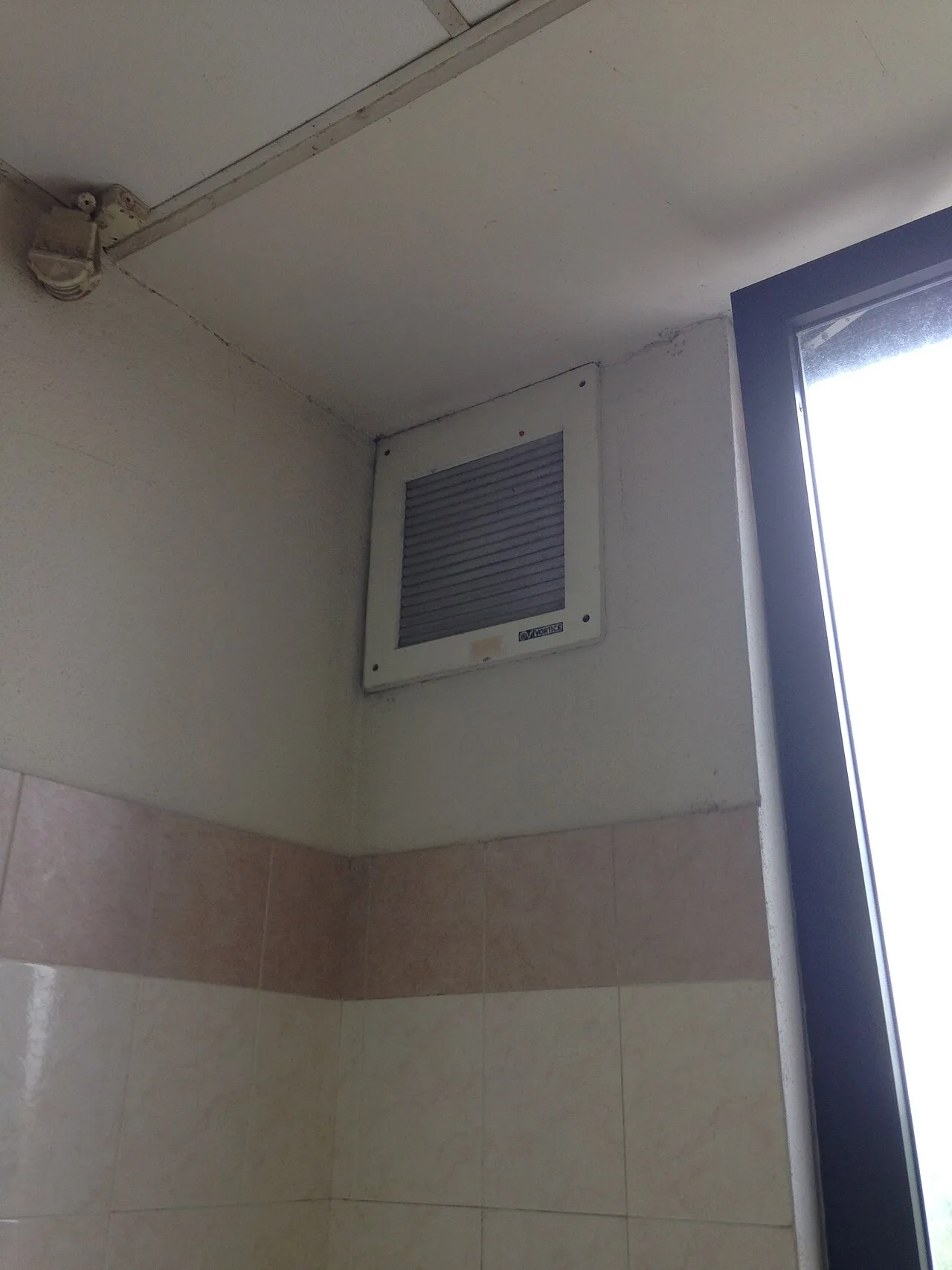
Record the existing model from accessible paperwork or a visible label without opening energized equipment. Note whether it has a light, heater, timer or humidity control. The replacement should preserve the functions you want and identify any new switch or circuit work rather than treating those as surprises on installation day.
Use the contractor estimate guide to distinguish the equipment, electrical work, exhaust route and finishing. If part of the work belongs to another trade, ask who coordinates it and whether the total includes that visit. An estimate that stops at mounting the fan can leave the bathroom unfinished.
A provider’s price sheet is a starting point
| Harrison Electrical’s published item | Starting figure | Limitation |
|---|---|---|
| Bathroom vent-fan replacement | $325 | Chart estimate, not a job quote |
| Estimated replacement time | 2.5 hours | Not a guaranteed duration |
| Troubleshooting/service call | $125 for first hour | Clarify whether separate from the chosen repair |
| Electrical labor | $60/hour | Confirm how it applies to extra work |
Source: Harrison Electrical’s own price sheet, created February 15, 2025 and still published when checked in October 2026. The company says prices include material and labor and vary with the building. Do not automatically add its troubleshooting price to the replacement figure.
For a hypothetical job using the $325 benchmark, separately quoted $180 duct repair and $120 ceiling finishing would total $625. Only the starting replacement figure comes from the provider’s sheet; the added amounts are assumptions showing how scope changes a budget. If the price already includes a task, do not add that task again.
An alternative quote might list fan equipment and labor separately. Compare its total against the first proposal after aligning the work. A high-capacity lighted fan and a basic fan-only replacement do not have the same equipment cost, and an owner-supplied unit can shift the product warranty claim to you.
Airflow ratings depend on resistance in the duct
Broan’s HVI performance page gives a useful illustration: the A80L is rated at 80 cubic feet per minute at 0.1-inch static pressure, with 1.0 sone sound and 42.3W power. At 0.25-inch static pressure, the listed flow falls to 68CFM. That is 12CFM, or 15%, below the first rating. The figures describe tested model performance, not a measurement in your bathroom.
Its A110L example lists 110CFM, 1.3 sones and 23.4W at 0.1-inch pressure, with 92CFM at 0.25-inch pressure. The two examples show why size, noise and power should be read together. They do not mean the larger unit fits an existing housing or that either fan solves every bathroom’s moisture problem.
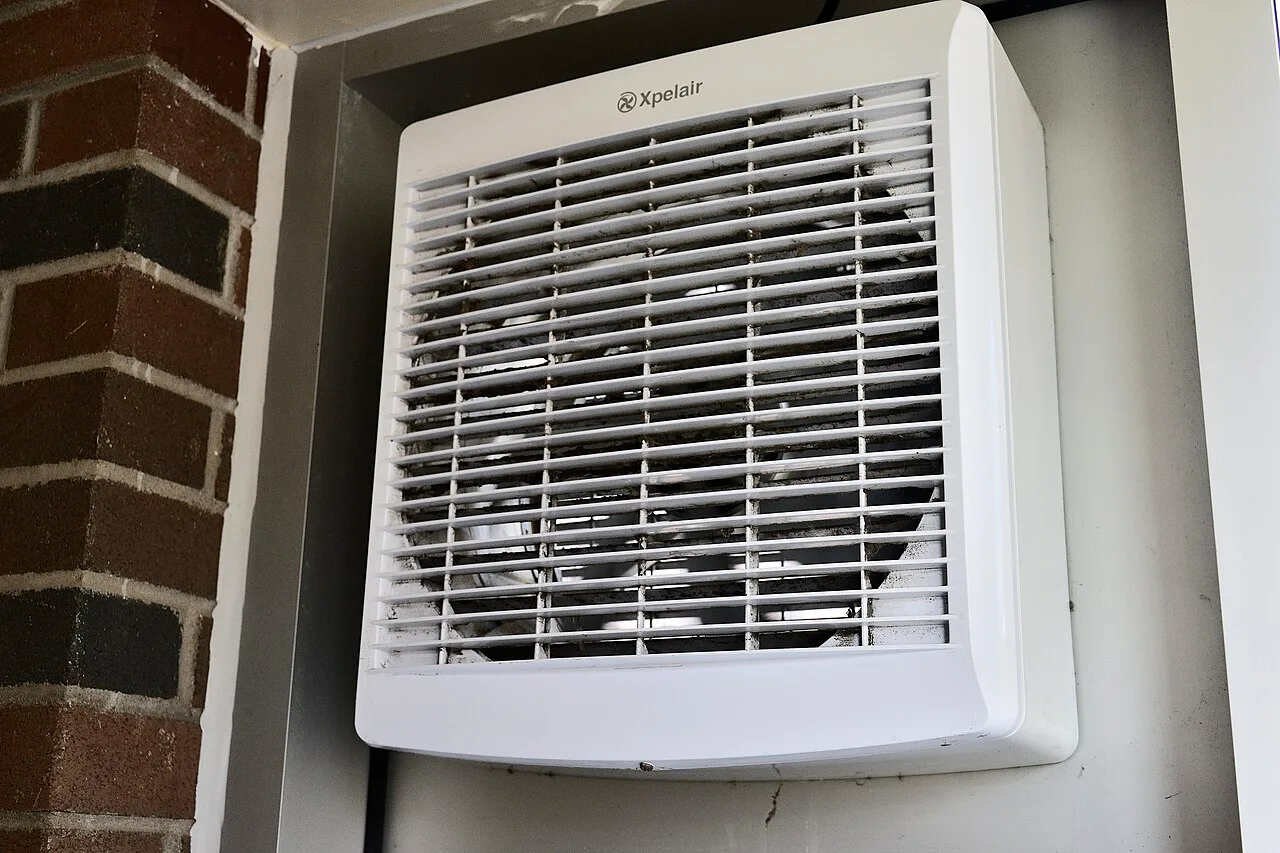
Ask the installer to identify the duct diameter, route and exterior termination, and to explain how they will check extraction after installation. Long routes, restrictive fittings, crushed duct and a sticking termination damper can prevent a fan from delivering the flow on its box. A different motor does not make those obstructions disappear.
A new exhaust route is a separate purchase
A like-for-like replacement uses an existing route only if that route can serve the new fan and carry moist air outdoors. Ask where the duct actually terminates. A duct that stops in an attic or ceiling cavity needs correction; buying a quiet motor leaves the moisture discharge problem in place.
The quote should name new duct sections, insulation where needed, exterior termination work and access openings. Roof or wall penetrations also need restoration and weather sealing. Ask whether a roofer is involved, whether the quote includes that contractor and who handles a leak at the new termination. Keep structural and weatherproofing changes out of an assumed basic swap price.
If persistent dampness is the reason for replacement, also identify other moisture sources. A plumbing leak or condensation at a cold surface is not proof that the fan is the only problem. The condensation and damp guide helps separate symptoms, while drywall repair costs covers restoring a ceiling opened during the work.
Finishing and operating costs belong in the comparison
Agree whether the installer patches an enlarged opening, matches texture, primes and paints. A new grille may hide a small difference in opening size, but it cannot be assumed to conceal every cut or stain. Painting a patch and repainting a whole ceiling are different purchases; record the finish boundary before comparing bids.
Fan electricity is usually a smaller part of this decision than installation. At the A80L’s listed 42.3W, a hypothetical 1 hour daily for 365 days uses about 15.44kWh. At an assumed $0.20/kWh, the fan portion costs about $3.09 yearly. That example is not a recommended ventilation schedule and excludes any separate light or heater load.
Read the chosen product’s warranty and the installer’s workmanship terms. Ask who pays for another visit if the fan rattles or extraction remains weak, and distinguish a product failure from a duct defect outside the original repair. The FTC recommends recording the work, materials, completion arrangements and price in an estimate you can compare.
Use a trained electrician or ventilation installer for supply, wiring and duct diagnosis. Do not probe a live fan or disturb suspect old material to inspect the route. If the job opens a ceiling in an older home, agree on lead and asbestos assessment before cutting or sanding.
Questions people ask
Does $325 buy every bathroom fan replacement?
No. It is Harrison Electrical's published starting estimate from its dated price sheet. The building, fan configuration, duct route and extra work determine the job quote.
Why can an 80CFM fan move less air?
The rating depends on test pressure. Broan lists its A80L at 80CFM at 0.1-inch static pressure and 68CFM at 0.25-inch pressure; installation resistance affects delivered flow.
Will a stronger fan fix an attic exhaust problem?
No. Moist air needs an outdoor discharge route. If the duct ends in the attic, the route needs correction as part of the project.
Should ceiling paint be included?
Ask explicitly. Fan installation, patching, texture, priming and painting can be separate services. Compare proposals with the same agreed finish boundary.
Where these figures come from
- Published electrical price guide Harrison Electrical · therightelectrician.com
- HVI performance ratings for example bath fans Broan-NuTone · help.broan-nutone.com
- Bath and exhaust ventilation fan FAQs Broan-NuTone · broan-nutone.com
- Protect your family from asbestos exposures US Environmental Protection Agency · epa.gov
- How to avoid a home improvement scam Federal Trade Commission · consumer.ftc.gov
Figures last checked October 2026.