On this page
A pool fence is not decoration and it is not a formality. It is the one measure that works when nobody is watching, which is precisely when these accidents happen.
The Consumer Product Safety Commission publishes Safety Barrier Guidelines for Residential Pools, and it is worth reading the actual requirements rather than guessing from what the neighbours have.
Key figures
- 48 inches CPSC minimum pool barrier height, measured outside
- 54 inches CPSC minimum adult door-alarm bypass switch height
Height and gaps
The top of a pool barrier should be at least 48 inches above grade, measured on the side of the barrier that faces away from the pool. That last detail matters: a fence that is 48 inches on the pool side but stands on a rise on the outside is not 48 inches where it counts.
The guidelines then work through every way a small child gets past a barrier:
- Under it. The clearance at the bottom is limited so a child cannot crawl through.
- Through it. Openings are limited, and vertical members are spaced so a small body cannot pass.
- Over it. Horizontal members that could be used as a ladder are kept on the pool side, or spaced far enough apart that they are not a climbing aid. Chairs, planters, air conditioning units and firewood stacks next to the fence defeat the whole thing.
The gate is the weak point
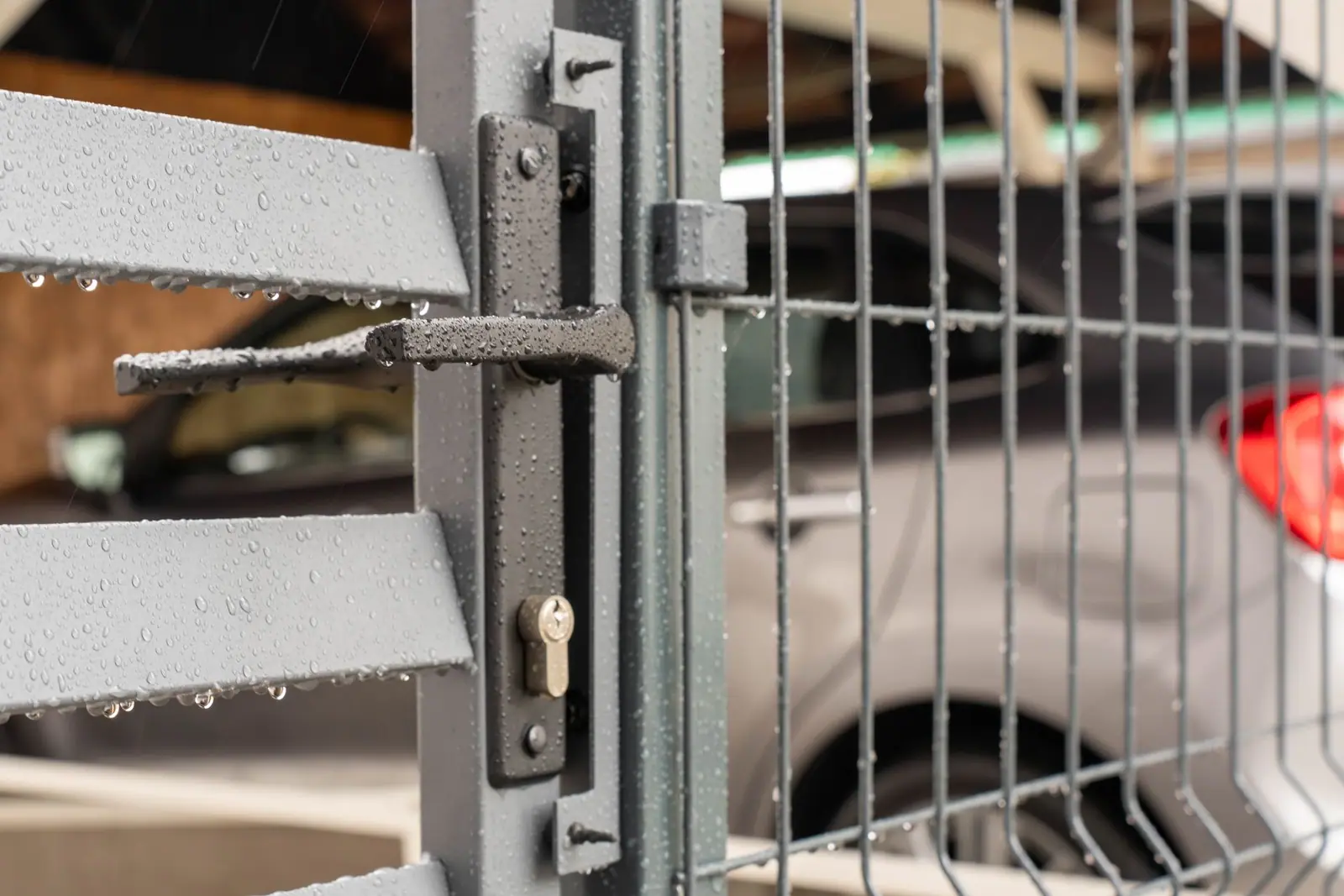
Most barrier failures are gates: propped open, latch broken, or a latch a three-year-old can reach.
The CPSC guidance: gates should be self-closing and self-latching, and where the release mechanism is less than 54 inches from the bottom of the gate, the release should be on the pool side, at least 3 inches below the top of the gate, so a child cannot reach over and open it.
Gates should open away from the pool.
Test the gate monthly. Open it halfway and let go: it should close and latch on its own, every time.
When the house is part of the barrier
Many homes have the house wall forming one side of the enclosure. That means every door to the pool area is a gap in the barrier.
The CPSC’s guidance for that case is explicit: all doors that allow access to the pool should have an audible alarm that sounds when the door or screen is opened, and doors should have self-closing and self-latching devices or locks beyond the reach of children.
Where a deactivation switch is fitted, it should be at least 54 inches above the threshold and out of reach.
A barrier is the foundation, not the whole answer. Alarms on doors, a power safety cover, and constant supervision when the pool is in use each cover a different failure. No single one of them is enough alone.
What binds you legally
Local building codes do. Many jurisdictions have adopted a version of the International Swimming Pool and Spa Code, and requirements for height, gates and alarms vary between them. Your building department will tell you which version applies and whether a permit and inspection are required.
The order to do this in: ask the building department what the code requires, build to at least that, and use the CPSC guidelines to fill in anything the code leaves vague.
Related reading: Pool Chemicals Send 4,500 People a Year to the ER and Pool Alarms and Safety Covers, Honestly Assessed.
Questions people ask
How tall does a pool fence have to be?
The CPSC guideline is at least 48 inches above grade, measured on the outside face. Your local code may require more, and local code is what binds you.
Does a pool cover count as a fence?
No. A power safety cover is a useful additional layer, and the CPSC treats it as one of several barrier types, but an ordinary solar or winter cover is not a barrier at all.
Do above-ground pools need a fence?
Usually yes, under local code. Where the pool wall itself forms the barrier, the ladder has to be removable or lockable so it cannot be used when the pool is unsupervised.
What if my house is one side of the fence?
Then the doors are gaps. The CPSC recommends audible alarms on all doors leading to the pool, plus self-closing hardware or locks out of children's reach.
Where these figures come from
- Safety Barrier Guidelines for Residential Pools US Consumer Product Safety Commission, Pool Safely · poolsafely.gov
- Pools and Spas safety guide US Consumer Product Safety Commission · cpsc.gov
Figures last checked September 2026.